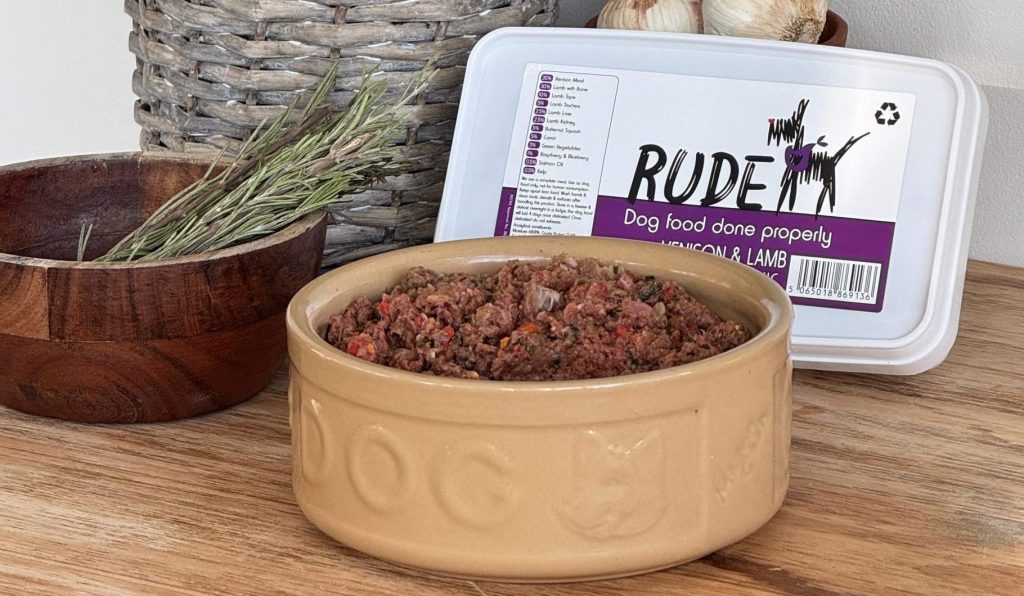
Walk down the pet food aisle and it all looks reassuring. Bright bags, bold claims, and words like “complete”, “balanced”, and “premium” everywhere you look.
But when you strip the packaging away, most dog food falls into one of two camps. Raw feeding, or hyper-processed food.
They are not the same. And the difference matters far more than most people realise.
Hyper-processed dog food is food that has been heavily altered from its original ingredients.
This includes kibble and many tinned foods. Ingredients are cooked at high temperatures, often multiple times, to create something shelf-stable, uniform, and cheap to produce.
During this process, natural nutrients are destroyed. To compensate, synthetic vitamins and minerals are added back in at the end. The food is then shaped, flavoured, and preserved to last months or even years.
It’s convenient. It’s consistent. But it’s far removed from what dogs evolved to eat.
Raw feeding uses whole, minimally processed ingredients.
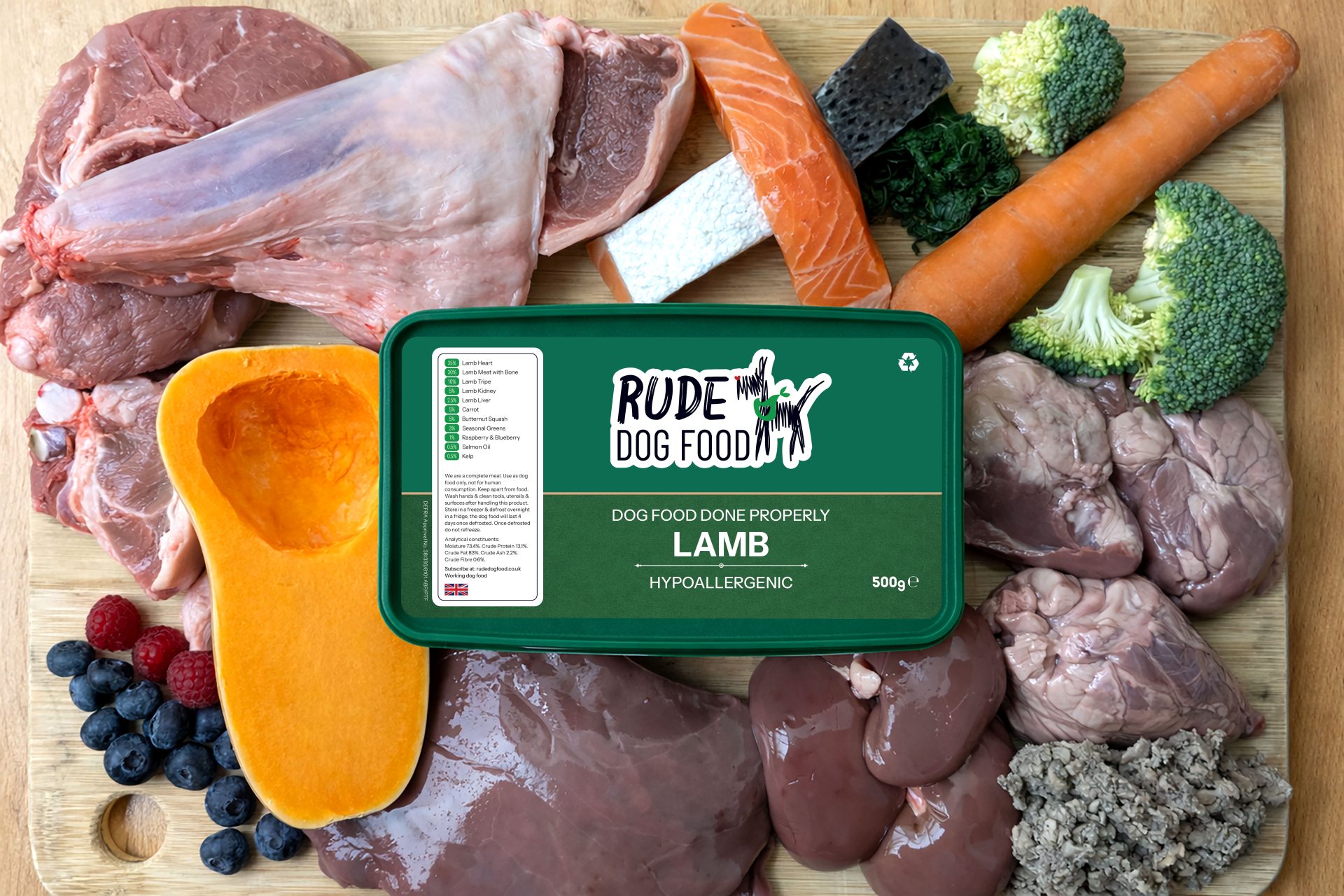
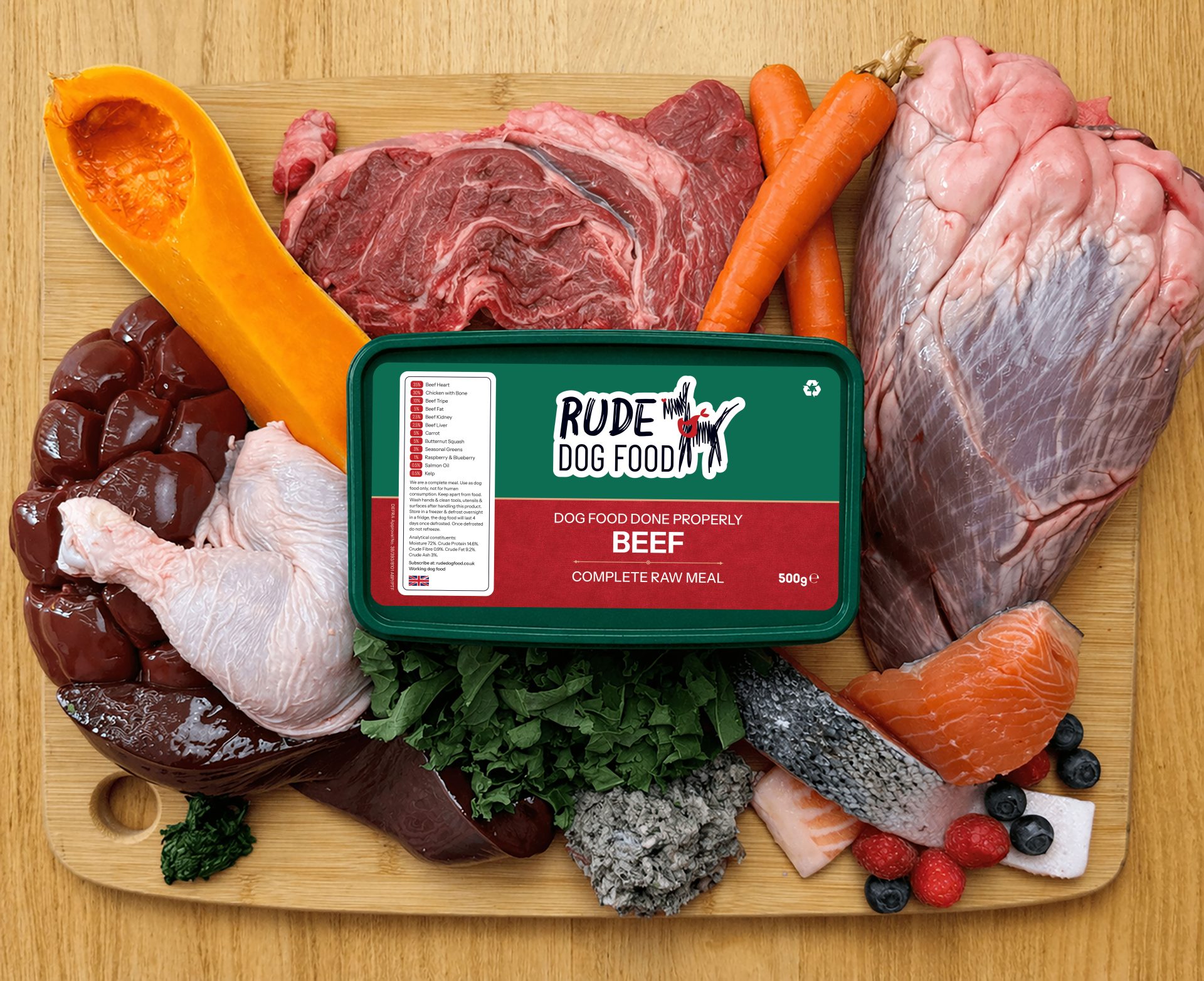
Raw dog food is made from meat, bone, offal, and small amounts of vegetables, kept in their natural state. Nutrients remain intact, enzymes are preserved, and the food is recognisable as food.
Raw feeding focuses on biology rather than manufacturing efficiency.

Dogs digest raw food differently to hyper-processed food.
Raw dog food is broken down quickly and efficiently, supporting healthy digestion and better nutrient absorption. Hyper-processed foods sit in the gut longer and can be harder to break down, particularly when filled with carbohydrates and fillers.
Many dogs fed raw have smaller, firmer stools and fewer digestive upsets. That’s not a coincidence. It’s how digestion is supposed to work.
Hyper-processed dog food relies heavily on synthetic nutrients.
Cooking destroys natural vitamins and minerals, so they are added back in to meet minimum standards. While this keeps dogs alive, it doesn’t always help them thrive.
Raw feeding delivers nutrients in their natural form, making them easier for the body to absorb and use. The difference shows up in energy levels, coat condition, and overall vitality.
Ingredient quality is one of the biggest dividing lines.
Hyper-processed foods often use vague terms like “meat derivatives” or “animal by-products”. Percentages are rarely clear, and fillers are common.
High-quality raw dog food is transparent. You know exactly what’s in the bowl, down to the percentages. There’s nothing to hide because there’s nothing unnecessary included.
Raw feeding supports more than just digestion.
Chewing raw bone helps maintain dental health naturally. Natural fats support joints and mobility. High-quality protein helps maintain lean muscle.
Hyper-processed food can’t offer these benefits in the same way, no matter how many claims are printed on the bag.
Hyper-processed food is designed for convenience and shelf life. Raw feeding is designed for dogs.
That doesn’t mean raw feeding is difficult. It just means it requires a freezer and a bit of planning. In return, dogs get food that aligns with their biology.
Convenience is useful. But it shouldn’t come at the cost of health.
Dogs fed hyper-processed diets may cope for years before issues appear. Digestive problems, skin conditions, dental disease, and weight issues often develop gradually.
Raw feeding supports long-term health by reducing inflammatory triggers and delivering nutrients in a form dogs are designed to use.
The difference is not always immediate, but it is cumulative.
Raw feeding isn’t about judging or extremes. It’s about understanding the difference between food designed for dogs and food designed for factories.
High-quality raw dog food, made with British meat, full transparency, and no fillers, offers a clear alternative to hyper-processed diets.
And when every meal also supports retired service dogs through the National Foundation for Retired Service Animals, it’s a reminder that better choices can have wider impact.
Because dogs deserve food that works with their bodies, not against them.

 Your Cart