You’ve heard the old English saying, “Give a dog a bone”. It’s often used to mean rewarding someone, which also implies that bones are a treat for dogs. But are there times when feeding your dog raw bones should come with caution? Let’s explore.
The Health Benefits To Raw Bones
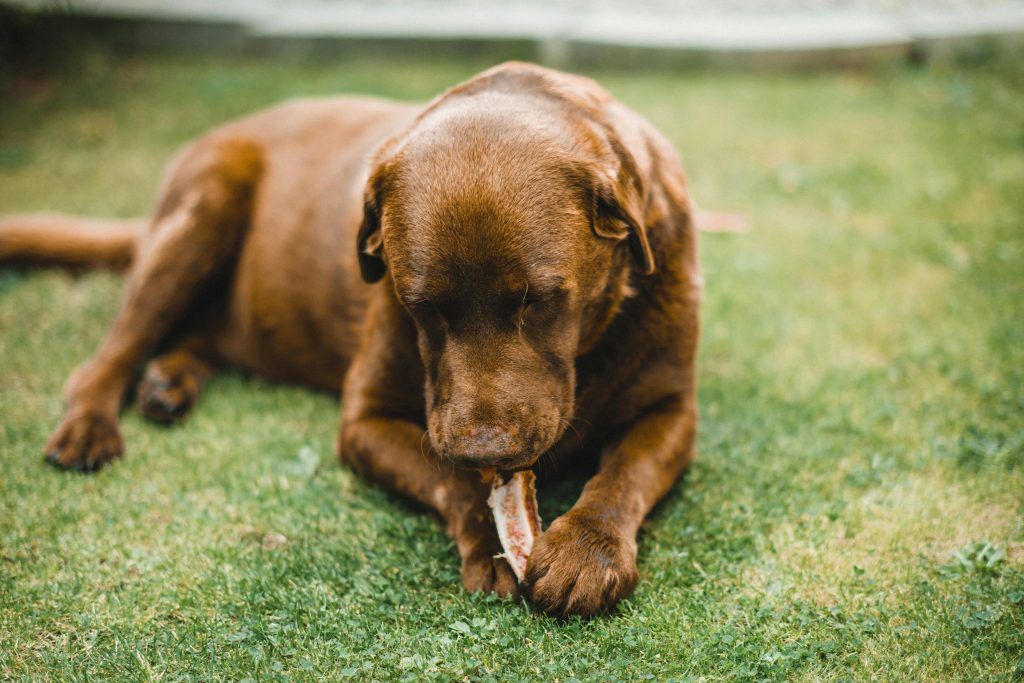
Bones aren’t just a tasty treat; they offer several important nutritional benefits too. Chewing on a raw bone helps clean and strengthen your dog’s teeth by naturally scraping away plaque and tartar. This makes raw bones a kind of natural toothbrush, helping to prevent common dental issues like decay, especially in dogs that aren’t on an appropriate diet.
Bones are also excellent sources of calcium and collagen, which are vital for maintaining strong teeth, bones, and healthy skin.
But the benefits don’t stop at physical health. Chewing on bones can also support your dog’s behaviour and wellbeing. If your dog has ever chewed up a shoe or piece of furniture, you’ll know how easily boredom can lead to destructive habits. Dogs need mental stimulation, and bones can provide a satisfying, time-consuming activity to keep them occupied far better than your new trainers.
When Bones Might Be Unsafe
While there are many benefits, it’s important to be aware of when bones can pose a risk.
Bones can become a choking hazard, especially if they’re cooked. Cooking causes bones to become brittle and prone to splintering. These sharp splinters can break off while your dog is chewing and get lodged in their throat, or worse, cause internal damage. The cooking process also denatures the bones so that they aren’t digestible for dogs like they once were when raw.
Raw bones are malleable and easily digestible for dogs. As always when chewing anything, always supervise your dog and ensure they’re chewing an appropriate size bone for your dog’s breed and chewing habits.
Why You Can Trust Our Recipes
We’re not sharing this to scare you off bones, we include them in every one of our raw meals at Rude Dog Food.
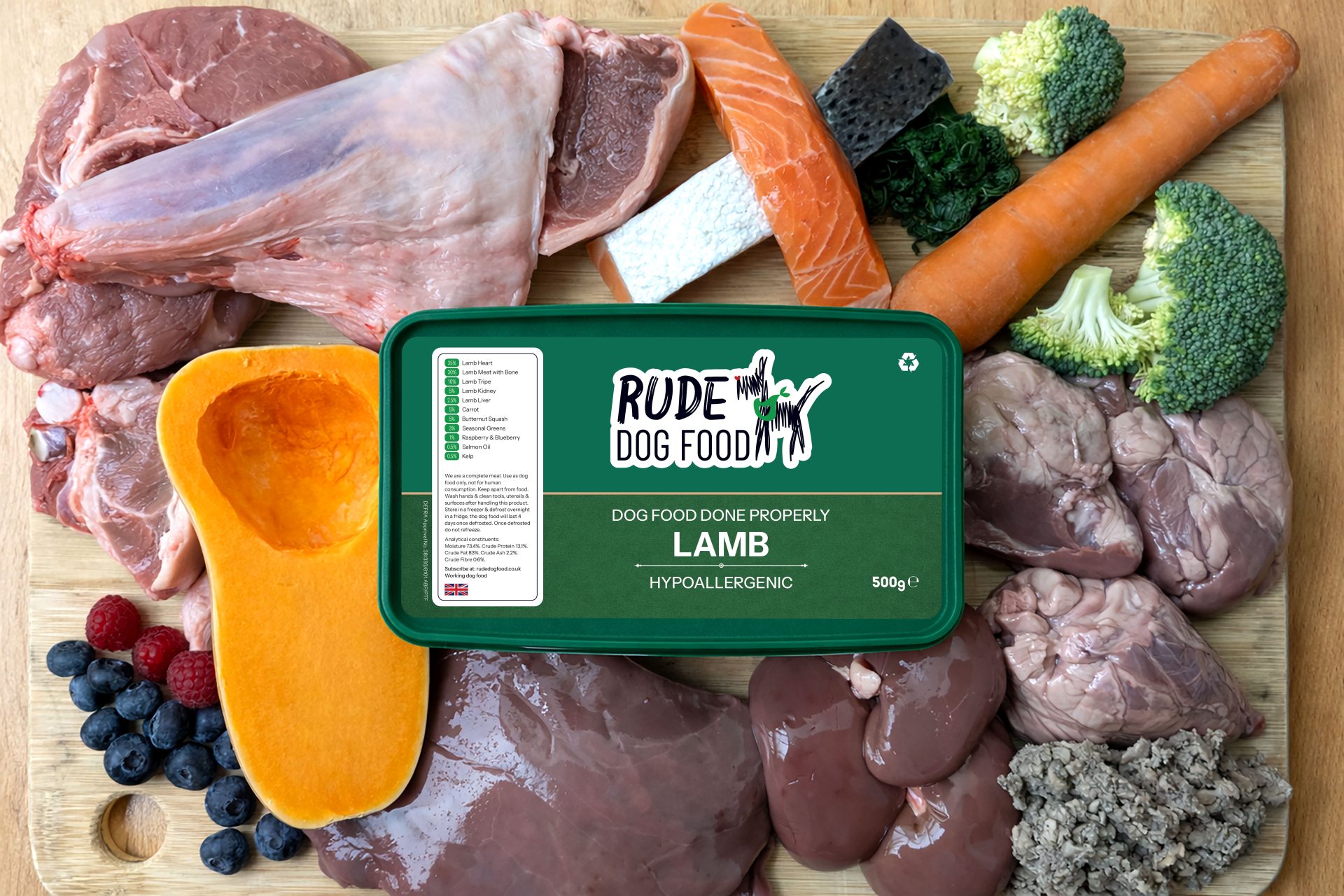
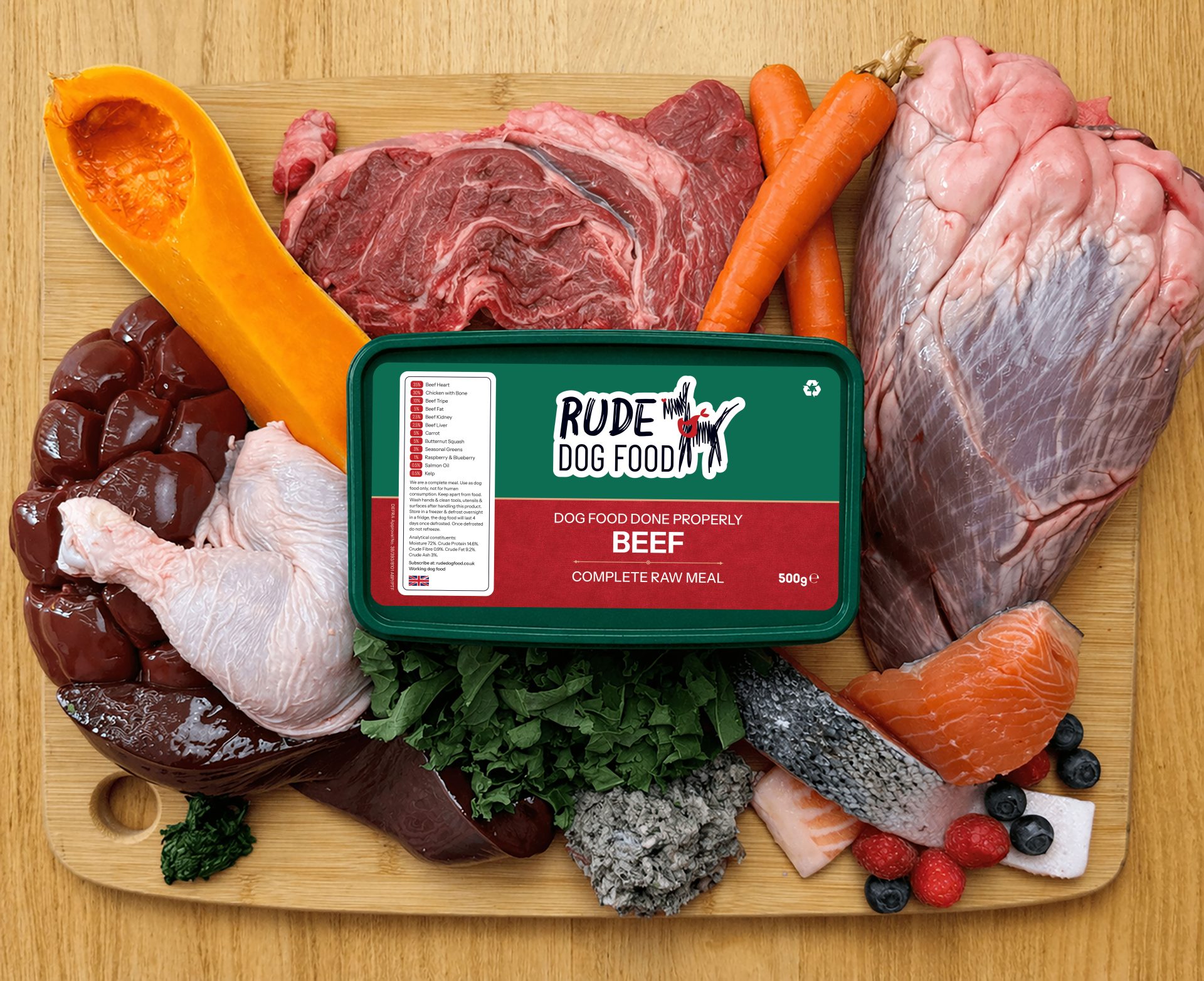
Our recipes are based on what dogs would naturally eat in the wild. Wild dogs and their ancestors consumed most of their prey, including some of the bone, to maximise their intake of nutrients. With that in mind, and with full awareness of the benefits, we include 10% bone in all of our complete and 80-10-10 meals.
To ensure safety and digestibility, we use a 9mm grind on all meat and bone, making our meals suitable even for small puppies. We also recommend that our meals are never cooked, to preserve the natural texture and structure of the bone content.
This is the only way your dog will receive a natural form of calcium is through raw bone consumption. Bones are extraordinarily good for their teeth, bones and digestion.
Best And Worse Meaty Bones
Not all bones are equal when it comes to feeding raw. As mentioned, cooked bones should NEVER be fed, but certain raw bones are better than others.
Raw lamb, beef, and poultry bones are generally safe and well tolerated by most dogs. However, pork bones, whether raw or cooked, are much more prone to splitting. These splinters can cause choking or even perforate the oesophagus, stomach, or intestines. For this reason, we steer clear of pork in all our recipes. Your dog’s health is our top priority.
The Round Up
So, should you add bones to your dog’s diet? In most cases, whole raw bones can be a safe and beneficial addition to support your dog’s physical health and mental enrichment.
For convenience and peace of mind, you can explore our online shop, where all meals are pre-prepared with the perfect balance of meat, offal, and bone to give your dog everything they need, safely and naturally.
Join the family
Lorem ipsum dolor sit amet consectetur. Suscipit ultricies nibh aliquam feugiat pharetra scelerisque pharetra nunc quis.

 Your Cart