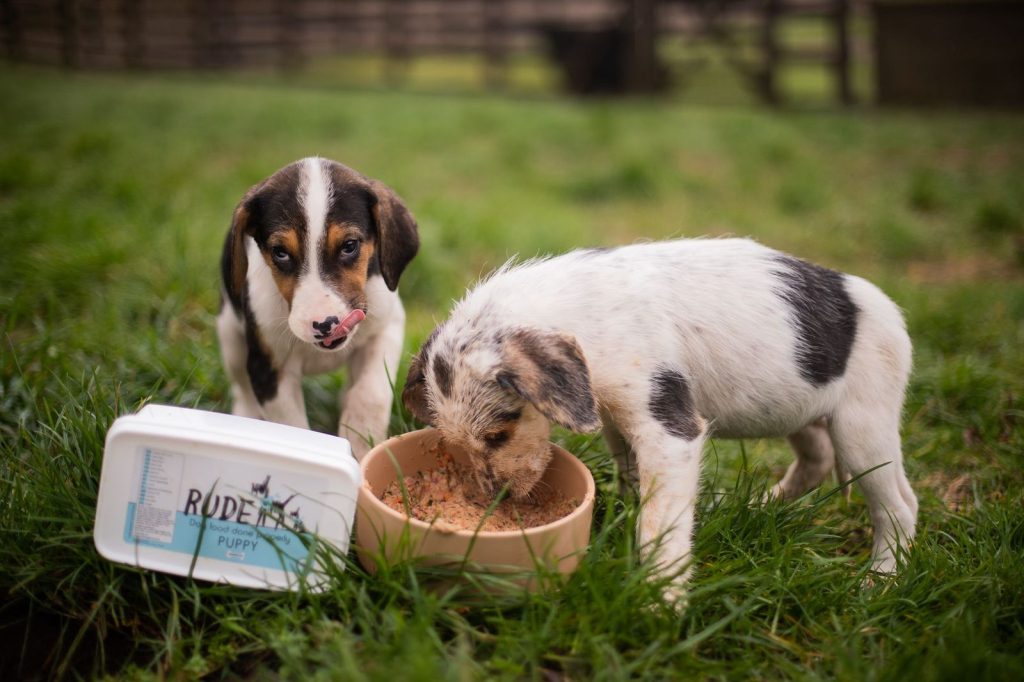
By the end of this article you will know all there is to know about puppy nutrition and feel confident in making the correct decision for your puppy.
Afterall, feeding a puppy can feel overwhelming. Every decision seems loaded with consequence, and advice often comes wrapped in warnings, contradictions and strong opinions. Raw feeding is no exception. Some people present it as risky or complicated, while others swear by it without explaining why. The truth sits somewhere far calmer and far simpler.
Puppies are not fragile creatures that need highly engineered food to survive. They are growing animals with digestive systems designed to adapt, develop and thrive on biologically appropriate nutrition. What a puppy eats in the early months of life plays a critical role in how their gut develops, how their immune system is shaped and how their body grows over time.
Raw dog food, when created properly, aligns closely with how a puppy’s body is designed to function. It provides real food, clear ingredients and nutrients in a form the body is designed to digest. This guide explains whether puppies can eat raw dog food, why early nutrition matters so much, and how to approach raw feeding with confidence rather than caution. By the end, you should feel clear, reassured and comfortable making the right decision for your puppy.
Puppies are designed to eat raw food. From the moment they are weaned, their digestive systems are built to adapt to fresh, animal-based nutrition and use it to fuel rapid growth and development. Feeding puppies raw dog food is not an alternative approach or a modern trend. It is the most biologically appropriate way to nourish a growing dog.
The early months of a puppy’s life are when bones form, muscles develop, organs mature and the cornerstones of the immune system are created. Nutrition during this stage is not something to compromise on. A properly balanced raw diet delivers protein, fats, calcium, phosphorus and essential micronutrients in a form a puppy’s body can recognise and use efficiently. This supports steady, controlled growth rather than forcing the body to adapt to heavily processed ingredients.
Concerns around raw feeding puppies usually stem from misunderstanding, not biology. Issues arise when diets are poorly balanced, not because the food is raw. When puppies are fed meals that contain the correct proportions of meat, bone and organs, raw feeding supports strong skeletal development, healthy digestion and long term health.
Puppies do not need highly engineered food to grow safely. They need real food, fed consistently and in balance. Raw feeding provides clarity, simplicity and nutritional integrity at a stage where it matters most. Feeding puppies raw food is not just safe. It is the most natural and effective way to set them up for a healthy life.

The food a puppy eats in the early stages of life does far more than fuel day-to-day growth. It shapes how their body develops, how their immune system responds to the world and how resilient they are later in life. This period is not forgiving. The foundations laid during puppyhood influence everything that comes after.
Puppies go through rapid growth phases where bones lengthen, joints form, muscles strengthen and organs mature at speed. During this time, the body needs nutrients that are easy to digest and biologically appropriate. When those nutrients are delivered in a natural, recognisable form, the body can focus on development rather than compensation. A raw diet supports controlled, steady growth instead of forcing the body to adapt to heavily processed food during its most sensitive stage.
Early nutrition also plays a critical role in how a puppy’s digestive system develops. The gut is not just responsible for digestion. It is central to immune function and long-term health. Feeding real food early helps establish a diverse and healthy gut environment, which in turn supports nutrient absorption, immune regulation and overall health. This is why diet choices made in puppyhood often create differences in the wellbeing of adult dogs.
There are studies that show us that making poor dietary choices for our puppies directly correlates with suffering with Allergies, inflammatory bowel disease or even hip dysplacia.
A simple, raw dog food diet during development reduces unnecessary stress on the digestive system and allows the body to mature as it is designed to. This is not about short-term results. It is about reducing the likelihood of issues developing years down the line.
Puppyhood is a one-time window. You cannot go back and rebuild foundations later. Feeding a biologically appropriate raw dog food diet during this stage gives a puppy the best possible start, supporting healthy growth now and resilience for the years ahead.

A puppy’s gut is developing rapidly in the early months of life. This is when the balance of bacteria that supports digestion, nutrient absorption and overall stability is established. Feeding a raw, species-appropriate diet during this period is of paramount importance to promote a diverse and resilient gut environment. Real raw dog food provides the natural fibres, proteins and fats that the gut is designed to work with, allowing it to develop properly rather than fighting to digest highly processed ingredients. A well-established gut microbiome supports smoother digestion and sets the tone for long-term health.
The immune system is closely linked to the gut, especially in young dogs. In fact, much of a dog’s immune response is influenced by what happens in the digestive tract. When puppies are fed a natural, balanced raw diet, the immune system is exposed to nutrients in their most usable form. This helps the body learn how to respond appropriately to everyday challenges rather than overreacting. Early nutrition plays a defining role in how resilient a dog becomes, and raw feeding supports immune development instead of asking the body to constantly adapt.
Many allergies seen in adult dogs do not appear overnight. They often develop over time as a result of repeated exposure to ingredients the body struggles to process. Puppyhood is the stage where this trajectory can be influenced most. Feeding a simple, raw diet with clearly identifiable ingredients reduces unnecessary stress on the digestive and immune systems during development. This gives the body the best chance to mature without confusion or overload, which can help lower the likelihood of sensitivities, inflammatory responses and allergies later in life.
Gut health, immunity and allergy risk are not separate issues. They are tightly connected, especially in growing puppies. Feeding raw food early supports all three at once, helping the body develop as it was designed to and creating a stronger, more stable foundation for the future.
Can puppies eat bone? Bone content and calcium levels are often the biggest concern people have when it comes to feeding puppies raw food. It’s actually one of the largest benefits of raw feeding. Puppies need calcium and phosphorus to grow safely, but they need them from a natural source in order to digest and use them properly. We know this due to the negative correlation between cooked food and hip dysplasia compared to raw food and hip dysplasia.
A properly formulated raw diet provides calcium in its natural form through edible bone, alongside the phosphorus and other nutrients that work with it. This matters because a puppy’s body is designed to regulate these minerals when they are delivered together, as they would be in a natural diet. Problems tend to arise when calcium is added artificially, fed in excess, or delivered without the supporting nutrients that help the body use it correctly. Bones cannot be cooked, because it denatures them and makes them difficult to digest, the only way for your puppy to truly be getting an appropriate natural form of calcium is via a raw diet.
Raw feeding supports steady weight management. This is especially important for larger breeds, where overly fast growth can place unnecessary strain on joints and skeletal structure. Feeding a balanced raw diet allows bones, muscles and connective tissue to develop in sync, while not being overloaded with excess weight.
It’s also important to be clear about what safe raw feeding looks like for puppies. Feeding random bones or guessing ratios is not appropriate. Balance is non-negotiable. This is why complete raw meals are such a reliable option during growth, as they remove the risk of imbalance and ensure calcium and phosphorus are present in the correct proportions.
When bone content is handled properly, raw feeding supports strong skeletal development rather than compromising it. Puppies do not need synthetic supplements or heavily engineered food to grow safely. They need real, balanced nutrition that allows their bodies to develop at the pace nature intended.
A balanced raw diet for puppies should be simple. Puppies need the correct proportions of meat, bone and organs at every meal to support safe, healthy growth. When that balance is right, the body develops naturally without stress or correction.
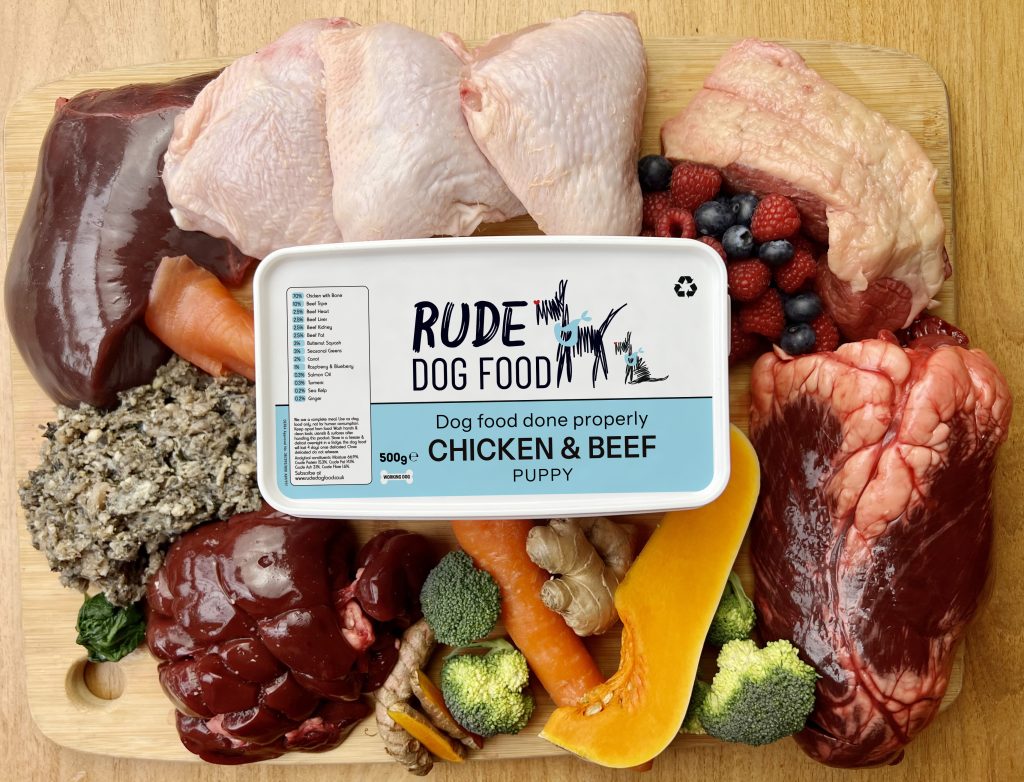
All Rude Dog Food meals are processed through a 9 mm grinder, which means they are suitable for puppies from 8 weeks old all the way up to senior dogs. This ensures bone content is finely ground and safe for dogs of all ages, while still providing the calcium and phosphorus puppies need for healthy skeletal development. There is no need to modify meals or worry about texture. Every blend is designed to be fed with confidence.
At its core, a balanced raw diet provides high-quality animal protein for growth, edible bone for mineral balance, and organs for essential vitamins and nutrients. These elements work together and must be fed in the right proportions. Guessing, topping up with extras, or feeding incomplete meals can create imbalance, which is why consistency matters so much during growth.
The Rude Dog Food Puppy Blend is a great addition to include a couple of times a week. It contains natural superfoods such as turmeric and ginger, chosen for their anti-inflammatory and antioxidant properties, offering extra support while still fitting into a balanced diet.
When meals are properly formulated and fed consistently, raw feeding is straightforward. Puppies grow steadily, digest comfortably and build strong foundations for a healthy adult life.
Transitioning a puppy to raw food is far simpler than many people expect. Puppies are naturally adaptable, and when they are introduced to biologically appropriate food early, most take to it quickly. The key is to stay calm, consistent and avoid overthinking every small change along the way.
Some puppies switch to raw food immediately with no issues at all, while others benefit from a more gradual transition. Both are normal. Factors such as age, previous diet and individual sensitivity all play a role. What matters most is paying attention to how your puppy responds rather than following rigid rules. A brief change in stool consistency, a quieter appetite for a day, or hesitation around a new protein are all common during the early stages and are rarely a sign that something is wrong.
Consistency is what allows a puppy’s digestive system to settle. Feeding balanced meals regularly helps the gut adapt to processing fresh food efficiently. Constantly changing, adding extras, or switching approaches too quickly can slow this process down. Simpler is better at this stage. Let the food do its job and give your puppy time to adjust.
It’s also important to remember that puppies’ bodies are learning what food is. Just as with any new experience, confidence builds through repetition. Once raw feeding becomes familiar, most puppies develop a strong appetite and digest their meals comfortably.
Transitioning to raw dog food is not a test you can fail. It is a short adjustment period that leads to long-term benefits. With a balanced diet, sensible expectations and a bit of patience, puppies settle quickly and go on to thrive. For those who want a more detailed, step-by-step approach, there is a dedicated guide that walks through the transition process in depth, making it even easier to get started with confidence.
Can puppies eat raw food from weaning?
Yes. Puppies can eat raw food from weaning, typically from around 8 weeks old, as long as the meals are properly balanced. At this stage, a puppy’s digestive system is highly adaptable and designed to transition onto real food. Feeding a nutritionally complete raw diet from weaning supports steady growth and helps establish healthy digestion from the very beginning.
How often should puppies eat raw dog food?
Puppies need to eat more frequently than adult dogs because they are growing quickly and using a lot of energy. Most puppies thrive on three to four meals a day, gradually reducing frequency as they mature. Feeding smaller, regular meals helps support stable digestion and consistent energy levels while avoiding unnecessary strain on the digestive system.
Will raw food make my puppy grow too fast?
No. Properly balanced raw food supports controlled, natural growth rather than rapid or forced development. Issues with growth are usually linked to excess calories or mineral imbalance, not raw feeding itself. When puppies are fed meals with the correct proportions of nutrients, their bodies grow at the pace they are designed to.
Can puppies eat bone safely?
Yes, when bone is included in the correct form and proportion. Finely ground bone, as found in properly formulated raw meals, provides essential calcium and phosphorus needed for skeletal development. This is very different from feeding random or inappropriate bones. Balance and formulation are what make bone safe and beneficial.
What if my puppy has loose stools when starting raw?
Mild digestive changes can happen during the transition to raw food. A temporary loose stool is usually a sign that the gut is adapting, not that something is wrong. Staying consistent, avoiding unnecessary changes and allowing time for adjustment is key. Most puppies settle quickly as their digestion becomes more efficient.
For more information on Feeding Raw dog food see our extensive breakdown of all you need to know about raw feeding beyond puppyhood

 Your Cart