
If you’ve ever told someone you feed your dog raw dog food, chances are the first thing they’ve said is, “But what about bones?”
It’s a fair question. Humans are taught from an early age that bones and dogs do not mix. Yet for thousands of years, dogs have eaten bone as part of their natural diet. Long before commercial pet food existed, dogs were chewing, crunching, and digesting bones without a problem.
So what’s the truth? Can dogs eat bone safely? And why does it matter so much when feeding raw dog food?
Let’s break it down properly, without myths, panic, or half-truths.
Dogs are not small humans. Their bodies are designed very differently to ours, especially when it comes to digestion.
A dog’s stomach acid is far more acidic than a human’s. This high acidity allows them to break down raw bone efficiently, killing harmful bacteria and dissolving minerals that are then absorbed by the body. Their teeth are also designed for ripping and crunching, not grinding grains or sipping smoothies.
In short, bone is not foreign to a dog’s system. It’s exactly what their digestive tract evolved to handle.
This is one of the key reasons raw dog food includes bone as a natural and necessary component.
When people hear “dogs eating bones”, they often picture cooked chicken bones splintering and causing damage. That concern is valid, but it applies to cooked bones only.
Cooked bones are dangerous because heat changes their structure. They become brittle, dry, and prone to splintering. Raw bones are completely different. They are softer, more flexible, and designed to be chewed and digested.
This is why responsible raw feeding always uses raw bone, never cooked. It’s also why raw dog food brands that know what they’re doing are extremely precise about bone content and sourcing.
Calcium is essential for dogs. It supports strong bones, teeth, muscle function, nerve signalling, and overall skeletal health. Phosphorus works alongside calcium to keep everything balanced and functioning properly.
Bone provides both in the correct, natural ratio. This matters because dogs absorb nutrients best when they come from whole food sources, not synthetic supplements.
In raw dog food, bone plays a crucial nutritional role. Remove it, and the diet quickly becomes unbalanced.

Chewing raw bone has mechanical benefits too.
As dogs gnaw on bone, it helps scrape away plaque and tartar from their teeth. This can improve gum health, reduce bad breath, and lower the risk of dental disease over time.
Many dogs fed raw dog food show noticeably cleaner teeth without the need for dental sticks or chemical additives. It’s not magic. It’s just biology doing its job.
Chewing is also mentally enriching. It satisfies natural instincts, relieves stress, and gives dogs something purposeful to focus on.
Raw bone contains more than just calcium. It also provides trace minerals and natural compounds that support joint health, including marrow and connective tissue.
These nutrients help maintain healthy joints, ligaments, and cartilage, especially in active dogs or those entering their senior years.
This is one of the reasons raw dog food is often recommended for dogs with mobility issues or breeds prone to joint problems.
While bone is beneficial, it needs to be fed correctly.
Too much bone can lead to constipation. Too little can cause mineral deficiencies. The balance matters, and it’s not something you should guess.
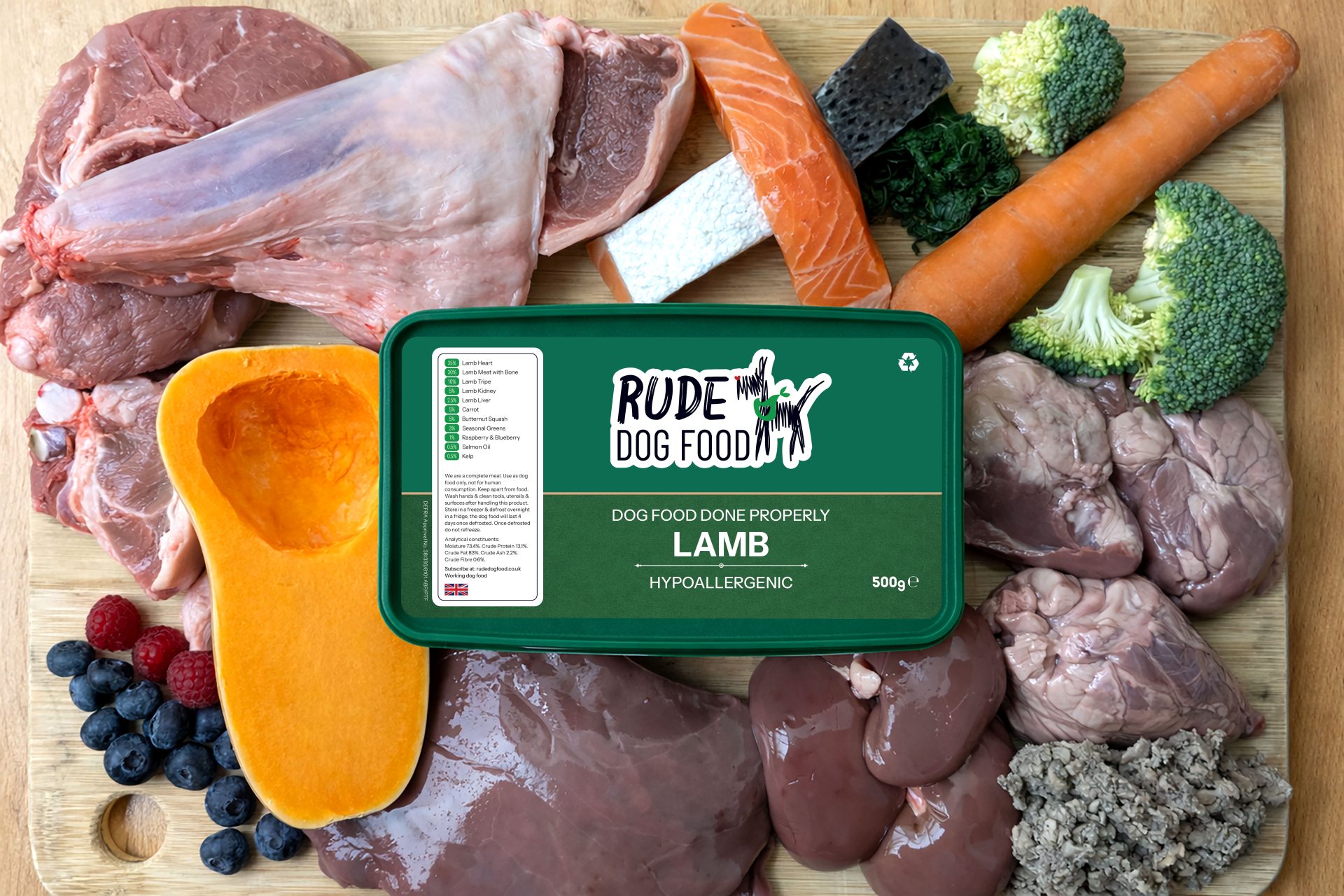
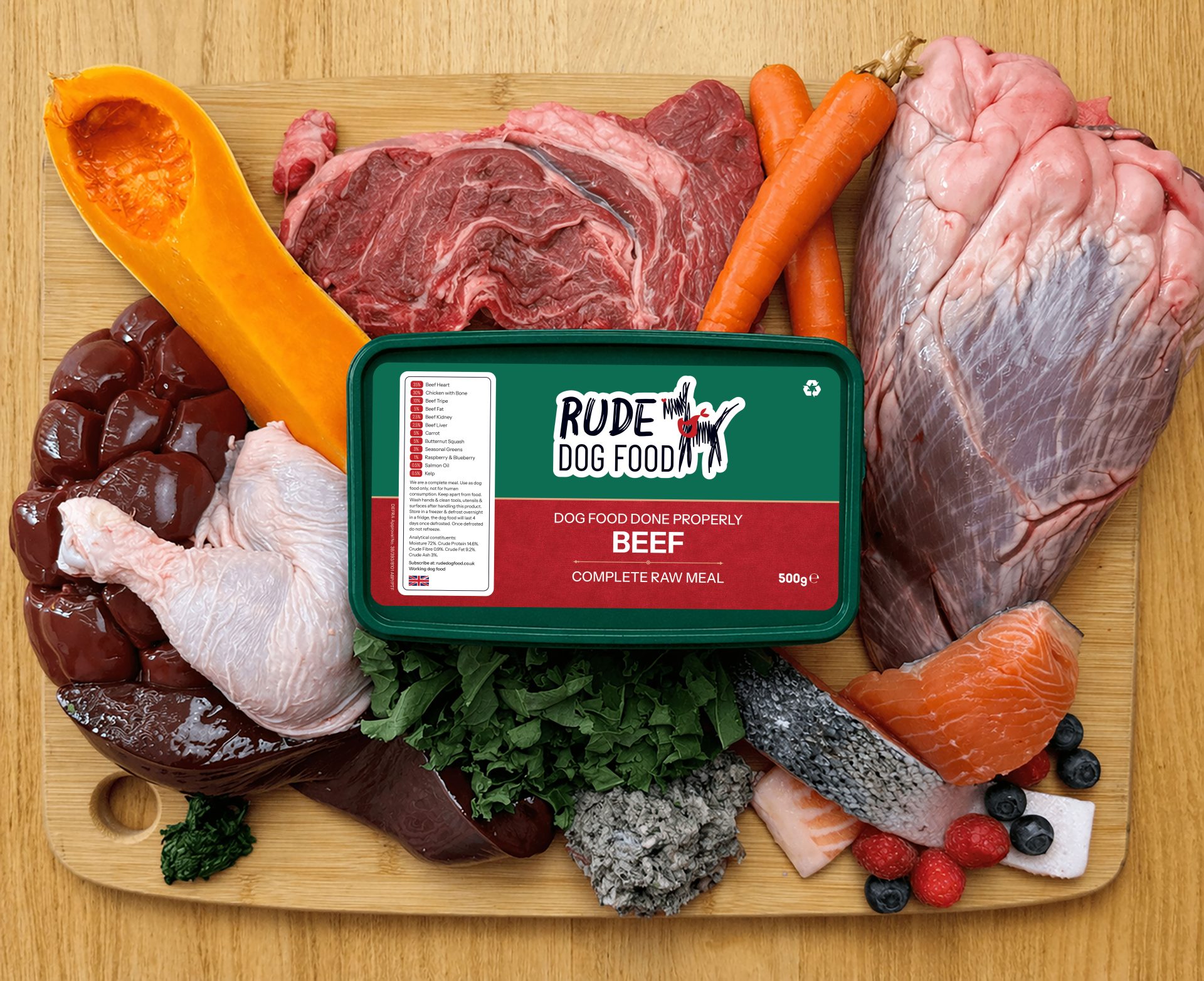
This is where high-quality raw dog food makes a difference. Properly formulated meals include bone in precise amounts, alongside muscle meat, offal, and vegetables. Everything your dog needs, nothing they don’t.
At Rude Dog Food, we show you exactly what’s in every recipe down to the 0.5 percent. No vague labels. No hidden fillers. Just honest food made for dogs.
Not all bone is equal.
The source matters just as much as the presence. Bones from healthy, responsibly raised animals are safer, more nutritious, and better for your dog overall.
Using British meat supports higher welfare standards, better traceability, and quality you can trust. It also supports British farmers and the countryside that makes this level of farming possible.
It’s one of the reasons British-sourced raw dog food stands apart.
The fear around dogs eating bone often comes from misunderstanding and decades of ultra-processed pet food marketing.
Raw dog food is not about trends or extremes. It’s about feeding dogs in a way that aligns with their biology. Bone is part of that picture, just as it always has been.
When fed raw, responsibly sourced, and correctly balanced, bone is not something to fear. It’s something your dog is built to thrive on.
And when every purchase also supports retired service dogs through the National Foundation for Retired Service Animals, it feels even better knowing your dog’s dinner is doing some good too.
 Your Cart