Thinking of switching your dog to a raw diet but not sure what a proper meal should look like? You’re not alone. We speak to loads of owners who are ready to ditch the dried stuff but feel totally overwhelmed by the idea of raw feeding. Don’t worry, this doesn’t need to be complicated. You don’t need a degree in nutrition to feed your dog well. You just need a bit of understanding and a clear breakdown of what a balanced raw bowl actually includes.
Why Go Raw in the First Place?
Dogs are carnivores. Not in the “they sometimes like meat” sense, but in the “their bodies are built for it” sense. That means their main dietary need is protein. And not just any protein. High-quality, animal-based protein. It’s what supports muscle repair, organ function, skin health and coat condition. That’s why raw-fed dogs often look glossier, leaner and stronger. The protein they’re getting is doing its job.
But protein doesn’t just build muscle. It also fuels the immune system. If your dog regularly picks up infections or seems to struggle shaking off minor illnesses, chances are they’re not getting enough of the right nutrients. Protein helps create antibodies, which fight off harmful bacteria and viruses. It’s essential stuff.
Should Raw Meals Include Fruits and Veg?
This is a hot topic in the raw feeding world. Some say dogs don’t need any vegetation at all. Others say they should have loads. We sit somewhere in the middle. Dogs’ wild ancestors, like wolves, would get bits of vegetation from the stomach contents of their prey. Just natural plant matter in small amounts.
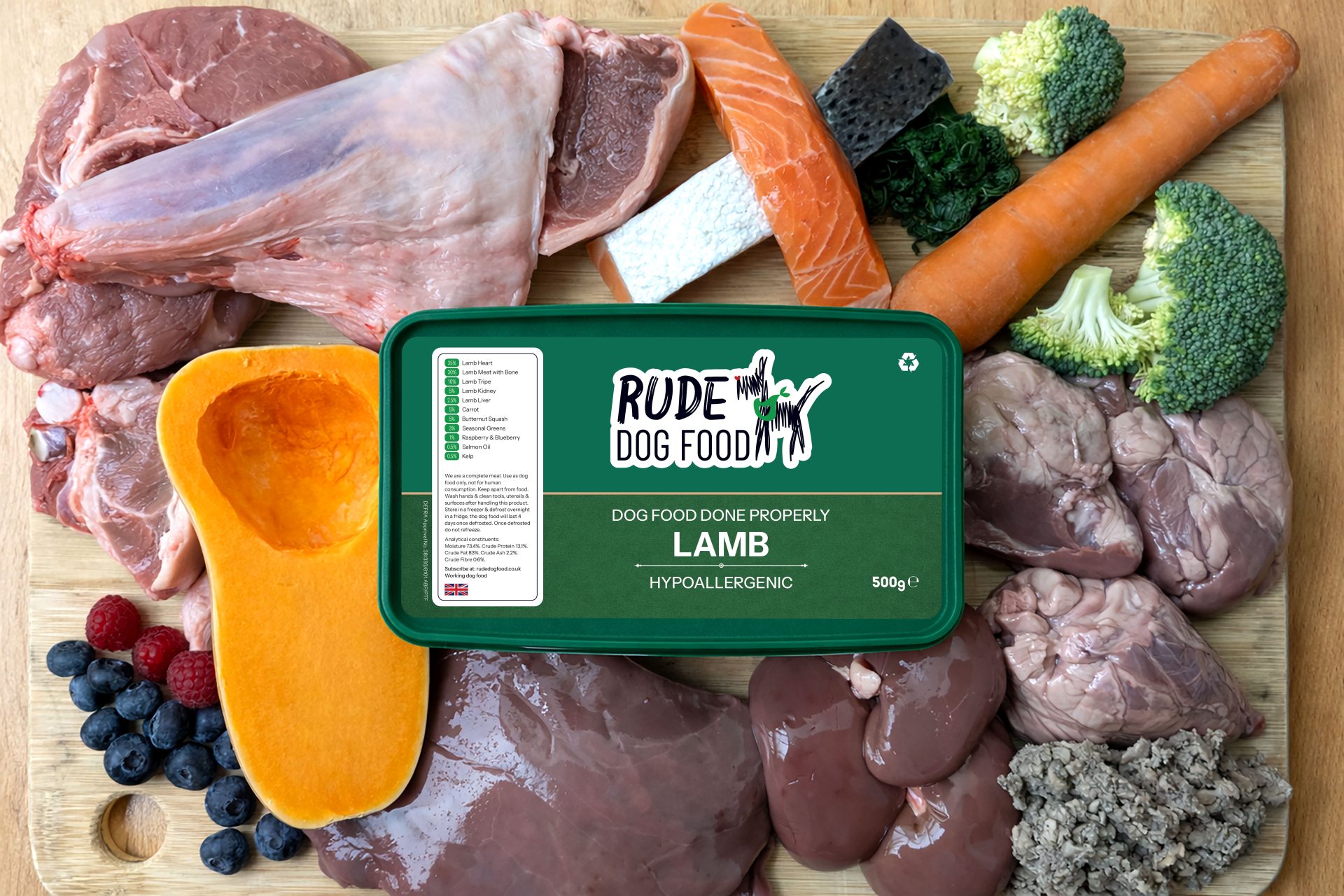
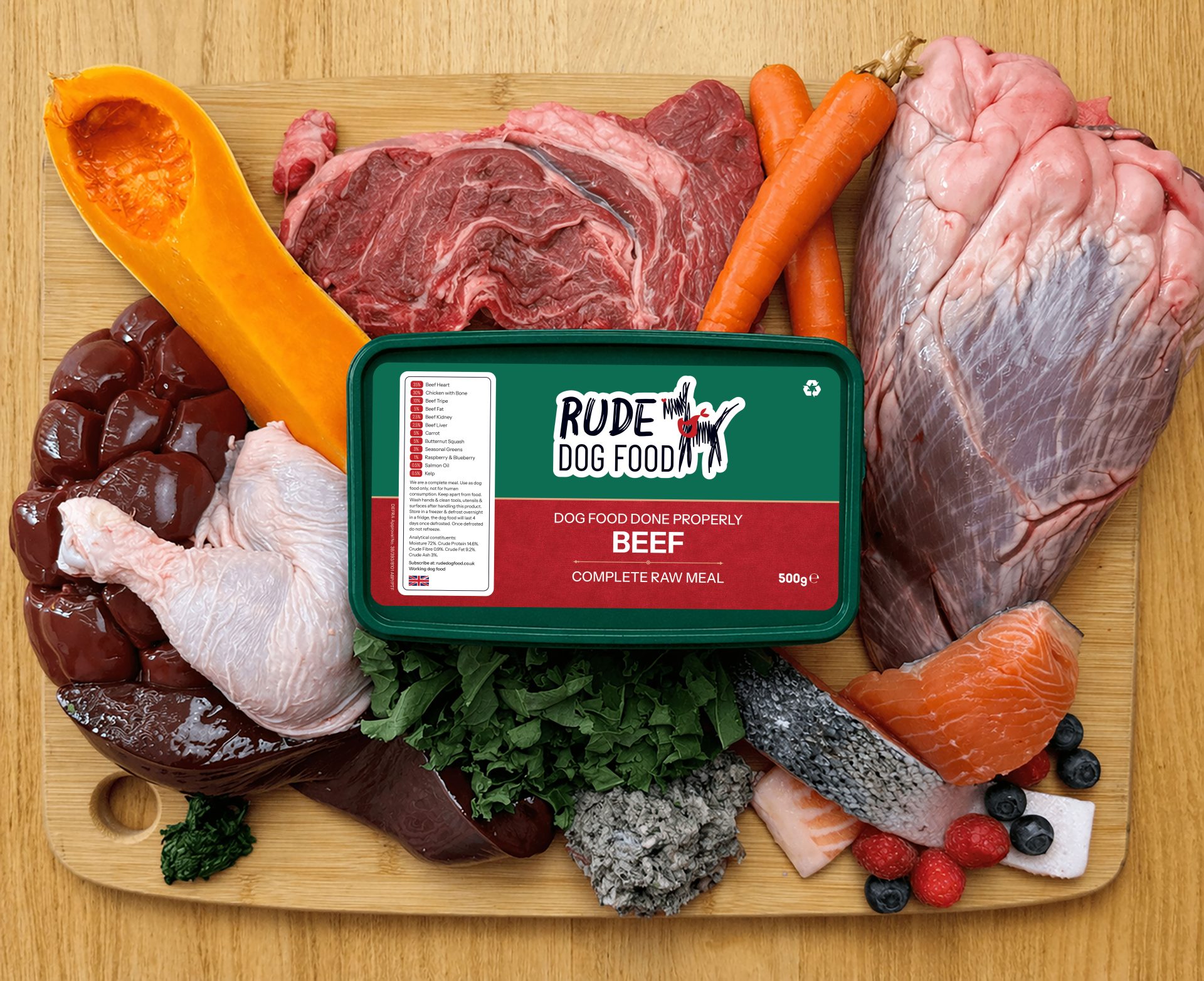
So, in our view, up to 15% fruit and veg in a complete meal is about right. Ingredients like seasonal greens, butternut squash, and berries offer fibre, antioxidants and gentle support for digestion. They’re not essential for every dog, but for most, they’re a valuable part of the bowl.
Of course, some dogs have sensitivities or medical conditions where less fibre or fewer carbs are better. If your dog has a sensitive stomach, skin flare-ups, or a condition like diabetes or IBD, then a lower-fibre option like an 80-10-10 blend (80% meat, 10% bone, 10% organ) might be more suitable.
So, What Does a Proper Raw Meal Look Like?
Let’s break it down.
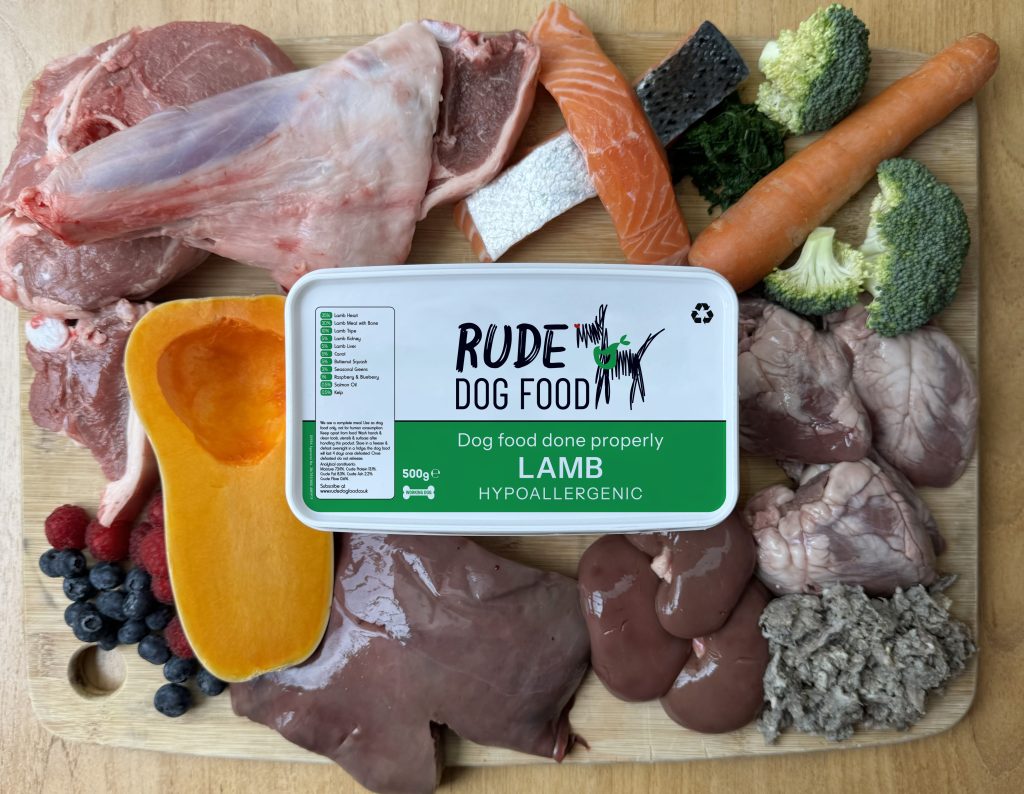
A well-balanced raw meal typically includes:
Muscle Meat (70–80%)
This is the base of any good raw diet. High-quality, species-appropriate protein fuels your dog’s body and brain.
Raw Bone (10%)
Ground bone offers natural calcium and phosphorus, crucial for strong teeth and bones. No cooked bones here, just finely minced, digestible bones that dogs can actually process.
Organs (10%)
Organs like liver, kidney and tripe are nutritional powerhouses. They’re packed with essential vitamins and minerals like iron, copper, and vitamin A. They also support hormone production and detoxification.
Fruit & Veg (Up to 15%)
While not strictly essential for all dogs, a small amount of fresh, fibrous plant material helps with digestion, stool formation, and antioxidant support.
Complete Meals vs. 80-10-10
We get asked this a lot. What’s the difference?
Complete meals are balanced for you. They’ve got the right percentages of meat, bone, organs and vegetation to cover your dog’s daily needs. It’s the easiest option if you’re new to raw feeding or just want convenience without compromise.
80-10-10 blends are more stripped-back. No fruit or veg, just the core components of a raw diet. Great for experienced feeders who like to customise their dog’s bowl, or for dogs that do better on simpler recipes due to health conditions.
To keep it simple and know your dog’s getting everything they need, a complete meal takes out the guesswork.
Why You Probably Don’t Need Supplements
Some people worry raw meals won’t provide everything their dog needs. In truth, if your dog’s meals are made from quality ingredients in the right ratios, they’ll get what they need from the food itself.
No powders. No synthetic multivitamins. Just nutrients as nature intended.
Think about it. Wolves aren’t scoffing down tablets with their dinner. And they manage just fine. In fact, many health issues in modern dogs, itchiness, dodgy guts, anxiety, and dental disease, are made worse by processed food and synthetic additives.
A well-formulated raw diet can help prevent a lot of that.
The Takeaway
Raw feeding doesn’t need to be a minefield. The goal is simple: feed your dog the way nature intended. Real meat, essential organs, digestible bone, and small amounts of vegetation for fibre and antioxidants. No filler, no junk.
Once you understand what a balanced bowl looks like, everything else gets easier. Your dog starts to look better, feel better, and behave better. And as an owner, that’s exactly what you want.
Keep it fresh. Keep it simple.
Join the family
Lorem ipsum dolor sit amet consectetur. Suscipit ultricies nibh aliquam feugiat pharetra scelerisque pharetra nunc quis.


 Your Cart