Some say dogs need vegetables in their diet, while others argue that vegetables have no nutritional benefit. It’s an ongoing conversation among raw feeders. But what is the truth on the matter?
Well, let’s look at what the research says, and where we at Rude Dog Food fall in this debate on dog nutrition.
The Species-Appropriate Diet
You may have heard us use the term “species-appropriate diet” before. This principle guides us to create food that reflects the biological needs of dogs.
We know that domestic dogs share a common ancestor with wolves. Both are carnivores, which means their main source of energy should come from animal protein.
In the wild, wolves hunt prey and eat the meat, organs, and bones. In addition, they consume a small amount of vegetation from the stomachs of their prey.
It’s this small but consistent intake of vegetation that justifies including modest amounts of fruits and vegetables in a species-appropriate raw diet. But just because wolves eat some vegetation, does that mean dogs need vegetables added to their food?
Dried Dog Food
In contrast to raw meals, many commercial dry dog foods are heavily plant-based, relying on peas, legumes, and starchy grains like wheat or rice. These are then mixed with small amounts of animal by-products such as chicken meat meal.
By the time these ingredients are cooked, much of the original nutritional value is lost. Manufacturers then add artificial vitamins so the meal can be labelled “balanced and complete.”
The result? Meals that are far from natural and don’t reflect what dogs would naturally eat in the wild.
Raw Vegetables and Improved Digestion
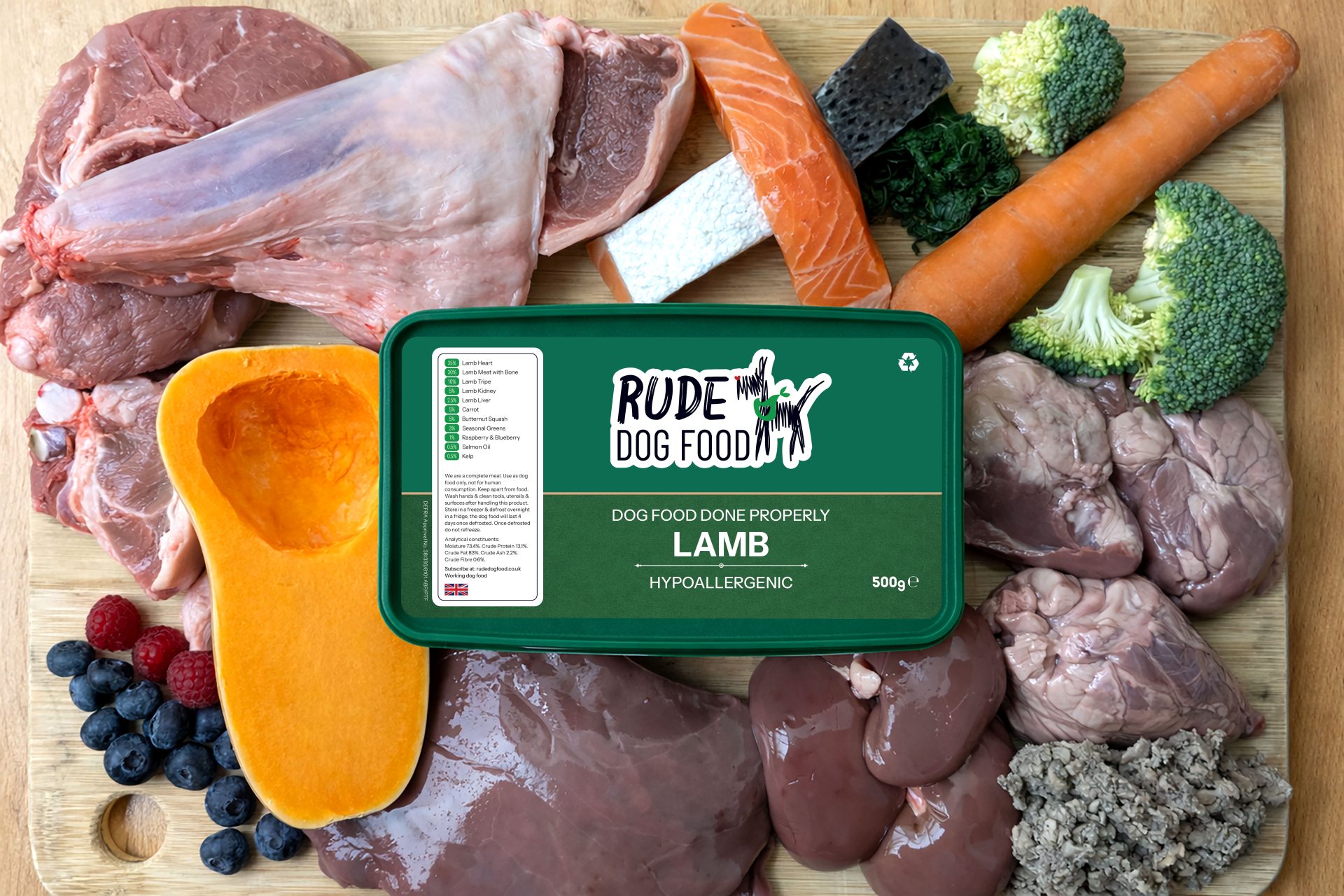
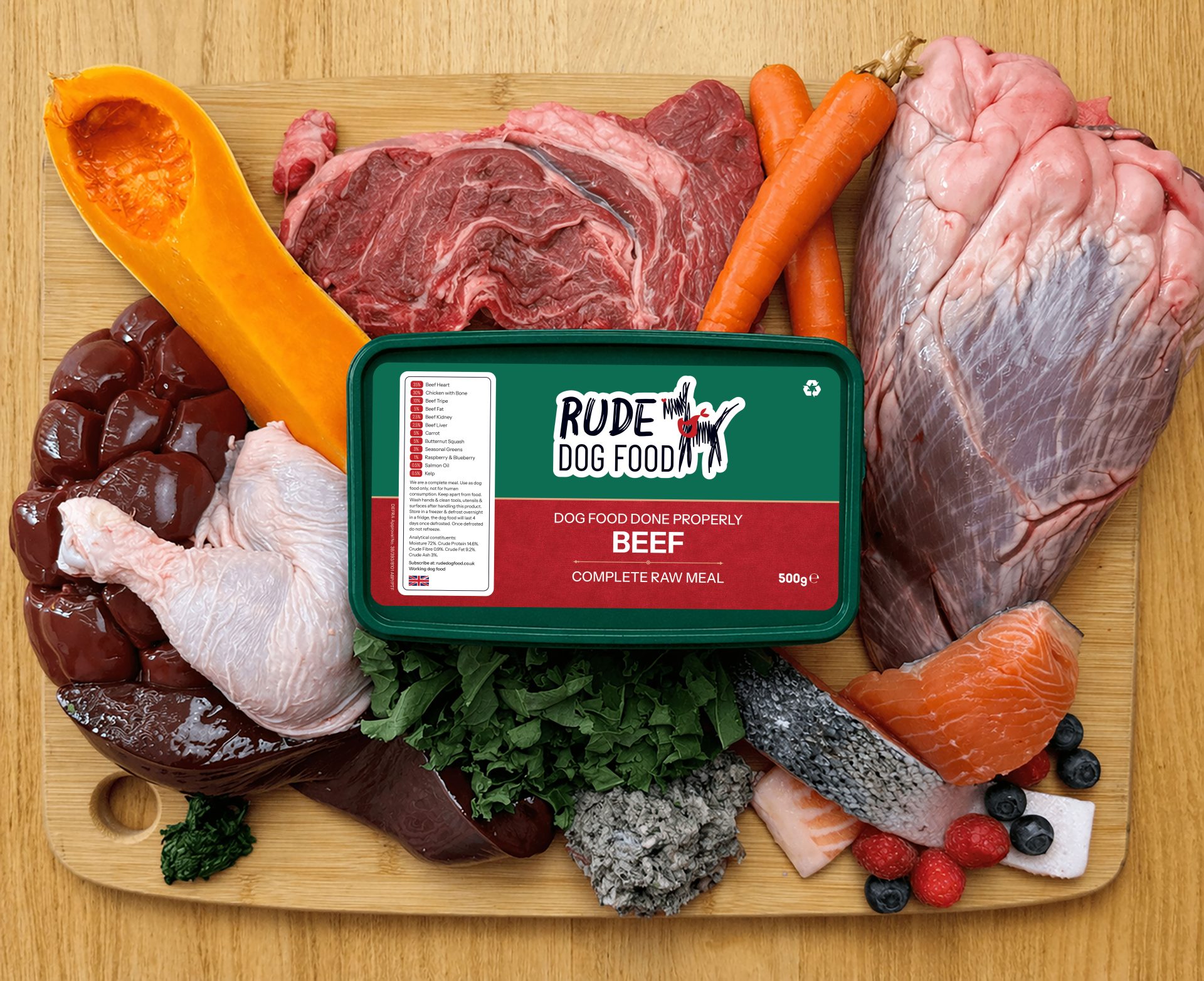
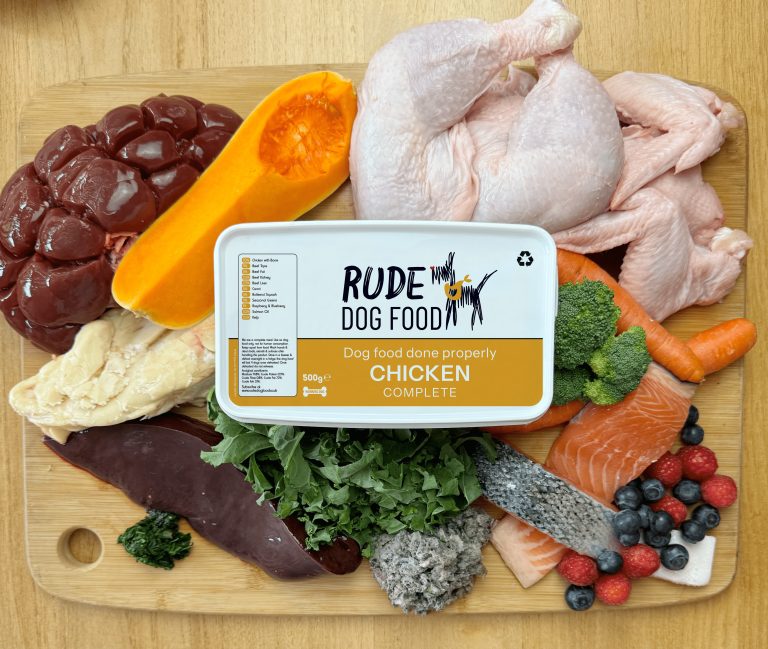
At Rude Dog Food, a small amount of our Complete recipes are made up of easy-to-digest vegetables and fruits.
10% of that is butternut squash, and carrot. Both are packed with fibre, which is crucial for healthy digestion. It is well known that raw food meals, including small amounts of fruit and veg, contributes to the formation of healthier stools, causing them to be smaller, firmer, and less pungent smelling.
Supporting Eye Health
Were you ever told as a child that eating carrots would help you see in the dark? While it might have been an exaggeration, there’s some truth to it, and it applies to dogs, too.
Carrots are rich in Vitamin A, which supports eye health and a strong immune system. While they won’t cure eye conditions, they can help reduce the risk of developing corneal and retinal diseases later in life.
Don’t Forget Some Greens!
Lastly, 3% of our meals include seasonal greens. These are a natural source of Vitamin K, which supports multiple vital functions in the body:
Blood clotting – Dogs often come back from off-lead adventures with scratches or cuts. Vitamin K helps wounds heal faster.
Bone strength – Calcium is crucial for bones, but Vitamin K regulates calcium, supporting strong bones and teeth.
When Vegetables Are Sometimes Not Advised
For most dogs, small amounts of vegetables in a balanced diet provide clear health benefits. However, some medical conditions may require more caution.
Dogs with digestive issues such as inflammatory bowel disease (IBD) or chronic pancreatitis may not tolerate high fibre well. That said, it’s not always black and white; tolerance depends on the severity of the condition and how it’s managed.
Many of our customers with dogs managing these conditions report great results with Rude Dog Food.
Bottom Line
Vegetables can absolutely support a dog’s overall health and vitality, but they should never make up the majority of a dog’s diet. High-quality animal protein must remain the foundation.
If your dog’s food contains more than around 20% vegetables, chances are it’s been done as a cost-cutting measure, not for the health benefit of your dog.
Join the family
Lorem ipsum dolor sit amet consectetur. Suscipit ultricies nibh aliquam feugiat pharetra scelerisque pharetra nunc quis.

 Your Cart