For years, dog owners have been conditioned to fear fat. It’s often blamed for weight gain, tummy trouble, and all sorts of health issues. But when it comes to dogs, especially dogs on a raw diet, fat isn’t something to avoid at all. In fact, healthy fats are one of the most important parts of a dog’s nutrition. When you understand why, feeding raw suddenly makes a whole lot more sense.
Think about athletes. A footballer, rugby player, or marathon runner doesn’t spend their life eating processed food. They rely on proper meals with real, nourishing ingredients including healthy fats, because that’s what powers their performance, protects their joints, and keeps their energy steady. Your dog’s body works in a very similar way. The right fats give them the fuel they need to thrive, inside and out.
Why Dogs Actually Need Fat
Many people assume dogs get their energy from carbs, the same way we do. But dogs are built differently. Their bodies run primarily on fat, and they’re incredibly efficient at using it. That means fat gives them slow, steady energy that lasts all day, not quick bursts followed by big crashes.
Fat also plays a big role in how your dog feels and functions. Their brain relies on it to stay sharp. Their hormones depend on it to stay balanced. And without fat, they can’t absorb important vitamins that keep their skin, eyes, and immune system healthy. When fat is missing or restricted, dogs often become sluggish, itchy, unfocused, or just generally “flat.” When fat is included properly, the difference can be remarkable.
Good Fats vs. Bad Fats (And Why Raw Wins)
Not all fats are equal, and this is where a lot of confusion comes from. The fat that naturally occurs in raw meat, and organs is completely different from the fats that get blasted and processed into kibble.
Fresh, raw fats are clean and easy for your dog’s body to use. They support the skin, soothe inflammation, and give a long-lasting energy supply. Processed fats, on the other hand, are often poor quality and heated to high temperatures, which damages them. This can make them harder for the body to use and may even contribute to skin problems or digestive issues.
When people see problems caused by bad fats in ultraprocessed food, they blame all fat, but raw feeding tells a very different story. When dogs eat natural, species-appropriate fats, everything starts working the way nature intended.
The Benefits of Healthy Fat in Your Dog’s Raw Diet
One of the first things owners notice when feeding raw is the difference in their dog’s skin and coat. Healthy fats nourish the skin from the inside, leading to softer fur, less itching, and far fewer dry patches. Many dogs who have struggled for years with dull coats start to shine within weeks.
Fat also helps protect your dog’s joints. Just like athletes rely on oily fish or high-fat whole foods to recover after tough training, dogs need those same supportive nutrients to stay comfortable and mobile. This is especially important for active dogs, larger breeds, or older dogs who can’t bounce back as easily as they used to.
Digestive health improves as well. Dogs digest fat far more naturally than they digest carbohydrates. When they’re getting the right fats in their meals, you’ll often see smoother digestion, less bloating, and noticeably smaller, firmer stools. It’s not the glamorous side of dog ownership, but it is one of the clearest signs that your dog’s body is running well.
Energy levels are another area where fat makes a huge difference. Dogs fed on kibble often experience the same ups and downs that people do when they rely on sugary snacks. Raw-fed dogs, powered by fat, have a calmer, steadier energy. They stay switched on and focused for longer, without the “wired then wiped out” cycle.
Can Dogs Get Too Much Fat?
It’s a reasonable question, and the short answer is yes, but it’s much less common than people think, especially when you’re feeding a complete raw diet. Problems usually come from giving lots of fatty scraps, cooked leftovers, or homemade meals that aren’t balanced properly.
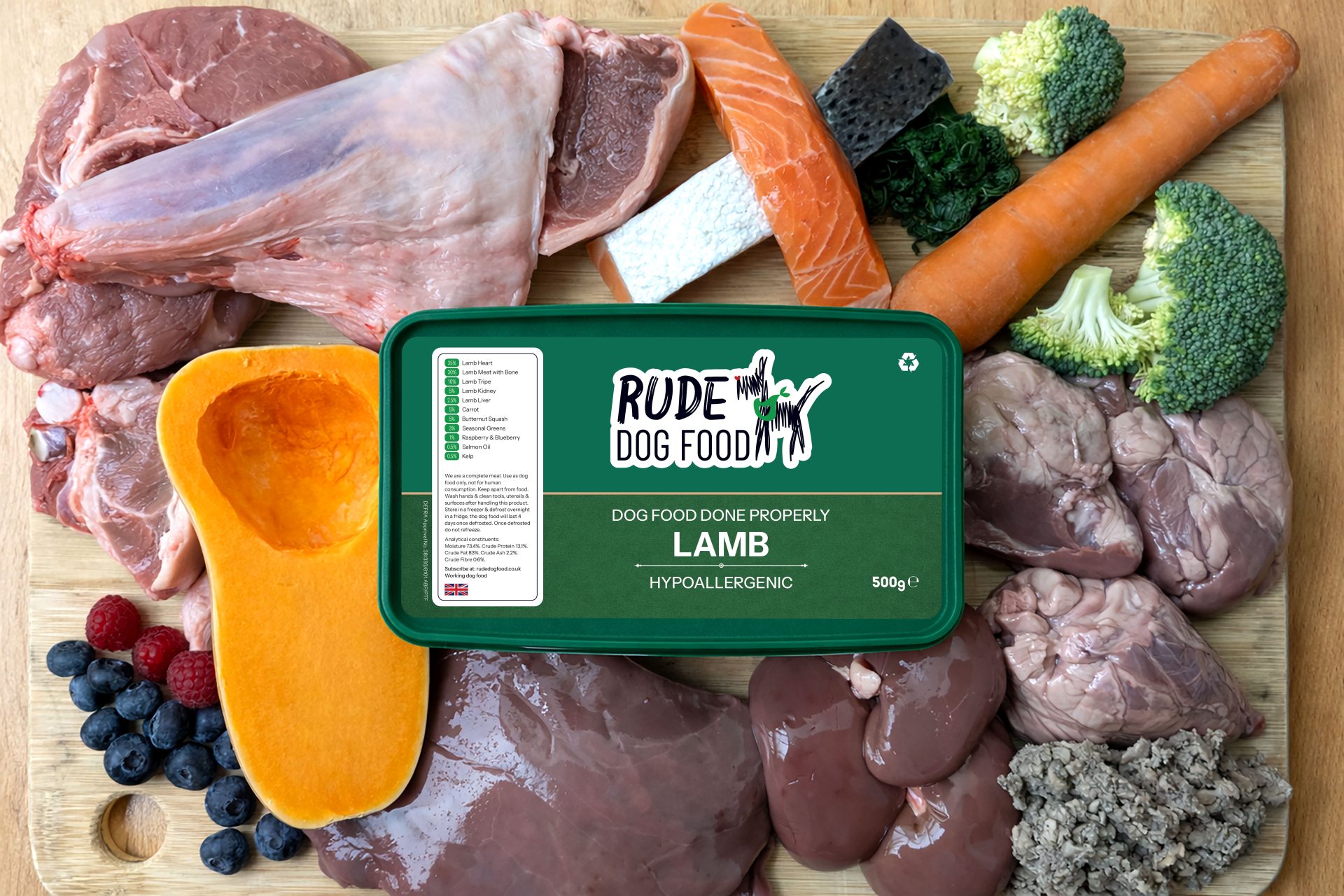
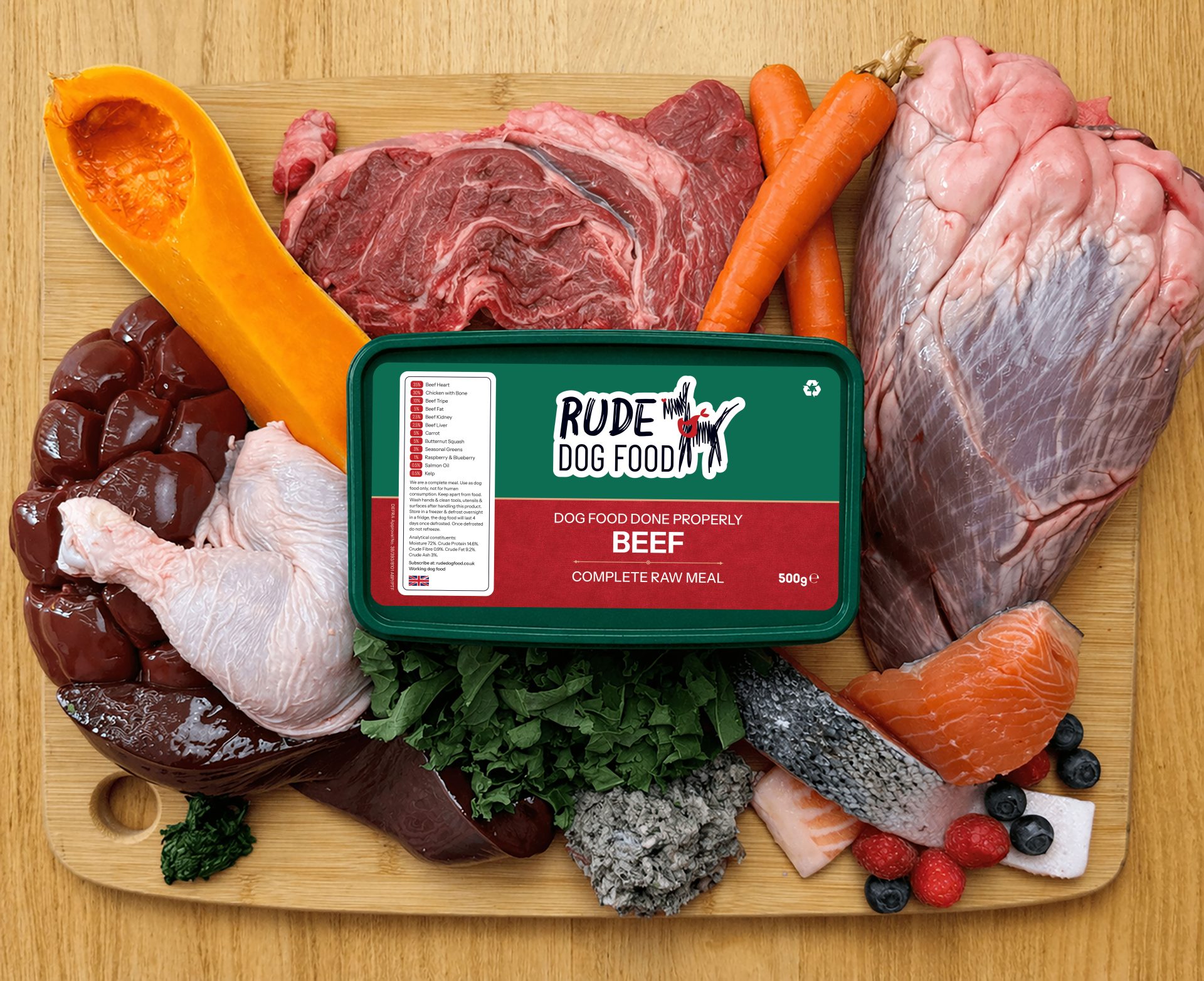
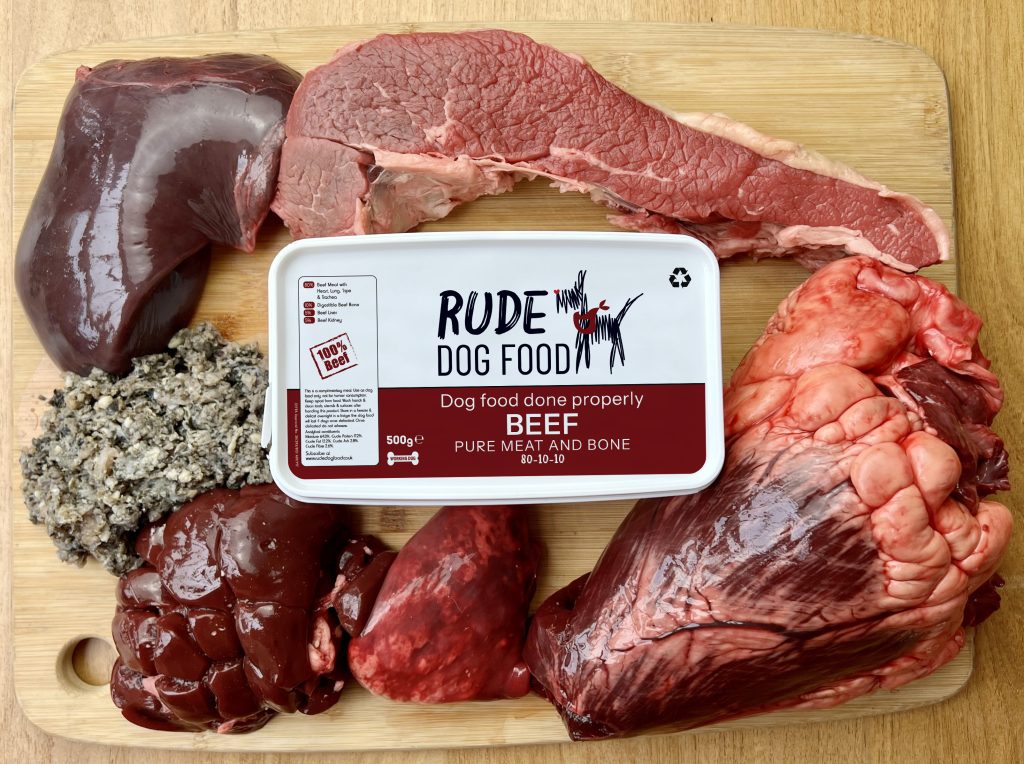
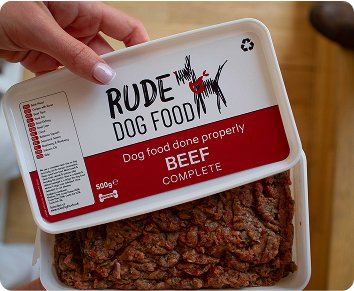
When you’re feeding fresh, pre-balanced raw meals (like Rude Dog Food), the fat is already included in the correct ratios. In other words, you don’t have to adjust anything yourself. The natural fat that comes from fresh ingredients is exactly what your dog’s body is designed to use.
Where the Fat in a Raw Diet Comes From
In a well-balanced raw diet, fat is not something that’s added, it’s part of the food itself. Beef, chicken, lamb, liver, and other organ meats all contain natural fats that support your dog’s health. These fats haven’t been heated, processed, or chemically altered. They’re clean, fresh, and easy to absorb.
At Rude Dog Food, our recipes are built around this idea. The fats come from real ingredients, not artificial additions. That means your dog is getting fuel exactly how nature intended, full of flavour, full of nutrients, and full of benefits.
Fat Helps Dogs Thrive
If you’ve spent years avoiding fat in your dog’s diet, it might feel strange to embrace it. But once you understand how your dog’s body works, it becomes clear: fat is not the enemy. It’s the foundation. It fuels their energy, supports their joints, protects their skin, powers their brain, and helps them absorb vital nutrients.
Healthy fats are one of the biggest reasons dogs do so well on raw food. When the fats are fresh and naturally balanced, dogs simply thrive.
So next time you’re choosing meals for your dog, remember this: the right fats don’t harm your dog, they help them flourish. And when those fats come from a fresh, raw diet, you’re giving your dog exactly what they need to feel their best every day.
Join the family
Lorem ipsum dolor sit amet consectetur. Suscipit ultricies nibh aliquam feugiat pharetra scelerisque pharetra nunc quis.
 Your Cart