
Lots of dogs struggle with allergy symptoms caused by food sensitivities and intolerances. Itchy skin. Constant paw licking. Upset stomachs. Ears that never quite settle.
It’s uncomfortable for them and worrying for you. And often, it seems to come out of nowhere.
Most dogs aren’t born with allergies. These sensitivities usually develop over time, and in many cases they’re linked to repeated exposure to the same ingredients in their food.
It can feel confusing when your dog has eaten the same meal for years without any issue, then suddenly starts reacting to it.
But that’s actually how many food allergies form.
When a dog is repeatedly exposed to the same protein, the immune system can begin to see it as a threat. Over time, that reaction builds until symptoms start to show.
The most common allergens for dogs include chicken, beef, and gluten. Chicken in particular is widely used in commercial dry dog foods, which makes it one of the most common triggers. It isn’t that chicken is inherently bad. It is simply everywhere. The more exposure, the higher the chance of sensitivity developing in some dogs.

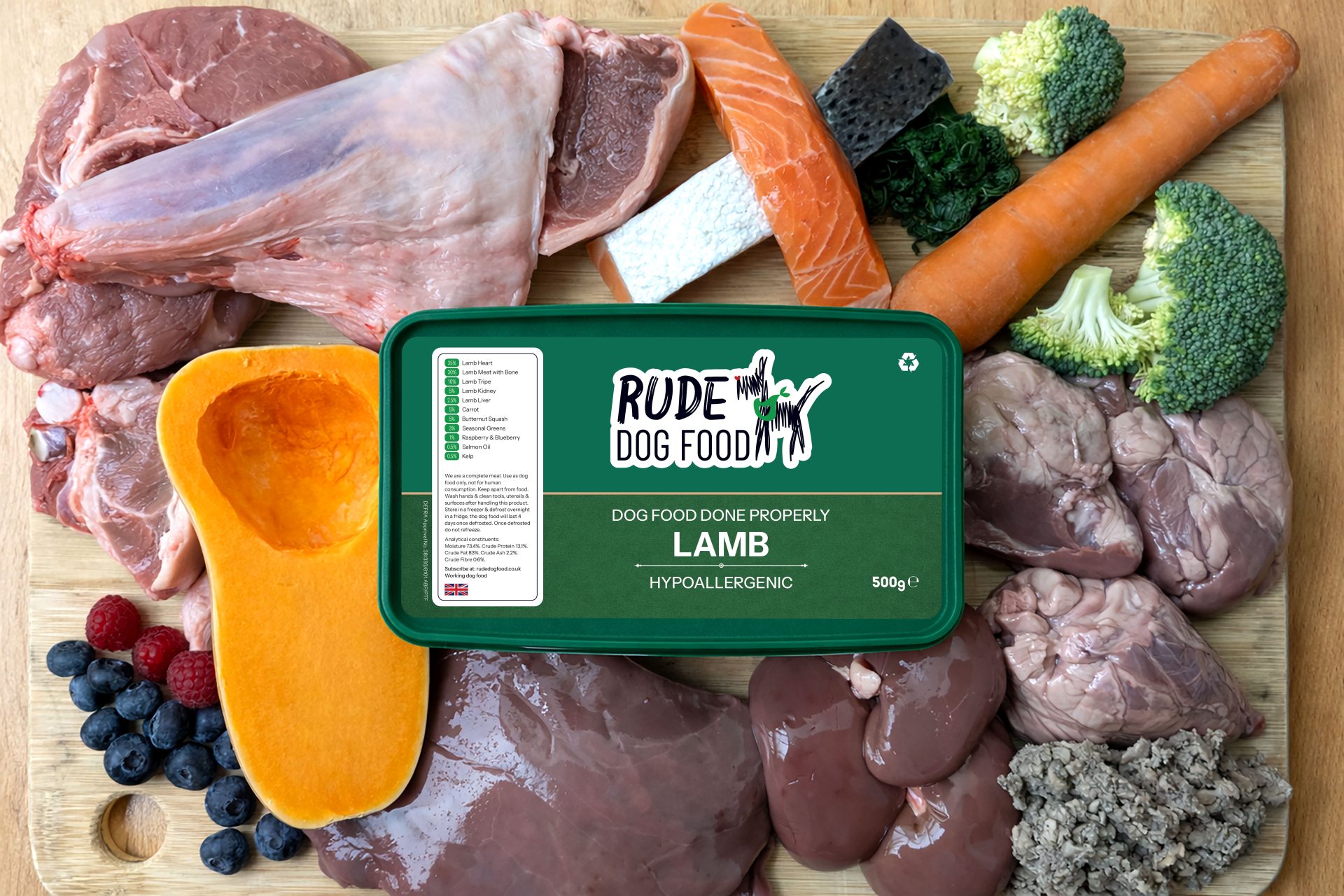
Not automatically. A raw diet can be hypoallergenic, but it depends entirely on the ingredients used. Hypoallergenic simply means the ingredients are less likely to trigger a reaction in dogs with sensitivities.
What works for one dog may not work for another. Every dog is different.
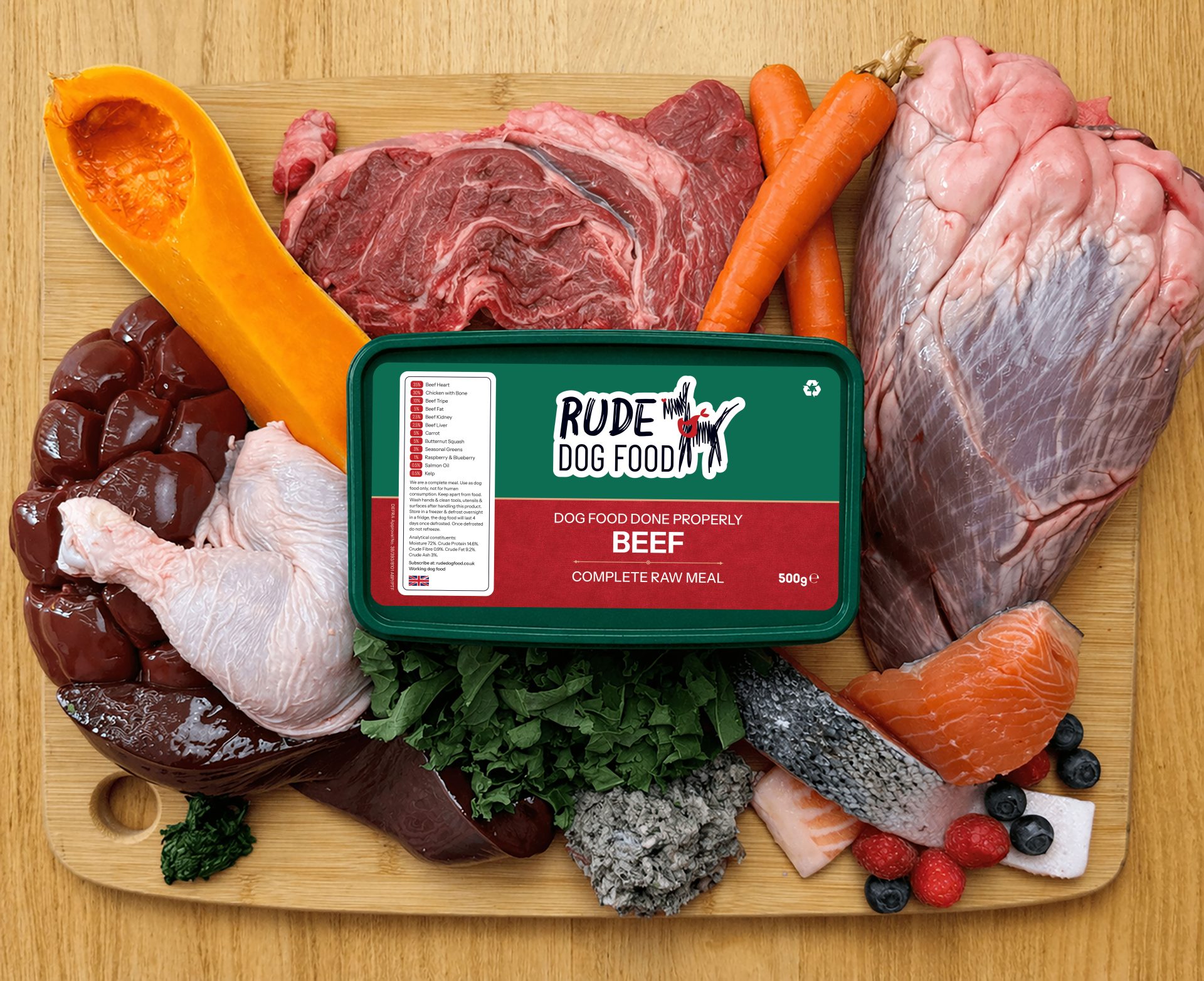
The advantage of feeding raw is clarity and transparency of the ingredients used. With clearly labelled, single protein meals, you know exactly what your dog is eating. There are no vague meat derivatives or hidden additives.
At Rude Dog Food, our raw meals are made with clearly defined proteins and no fillers. That transparency makes it far easier to identify and avoid ingredients that may be causing problems.
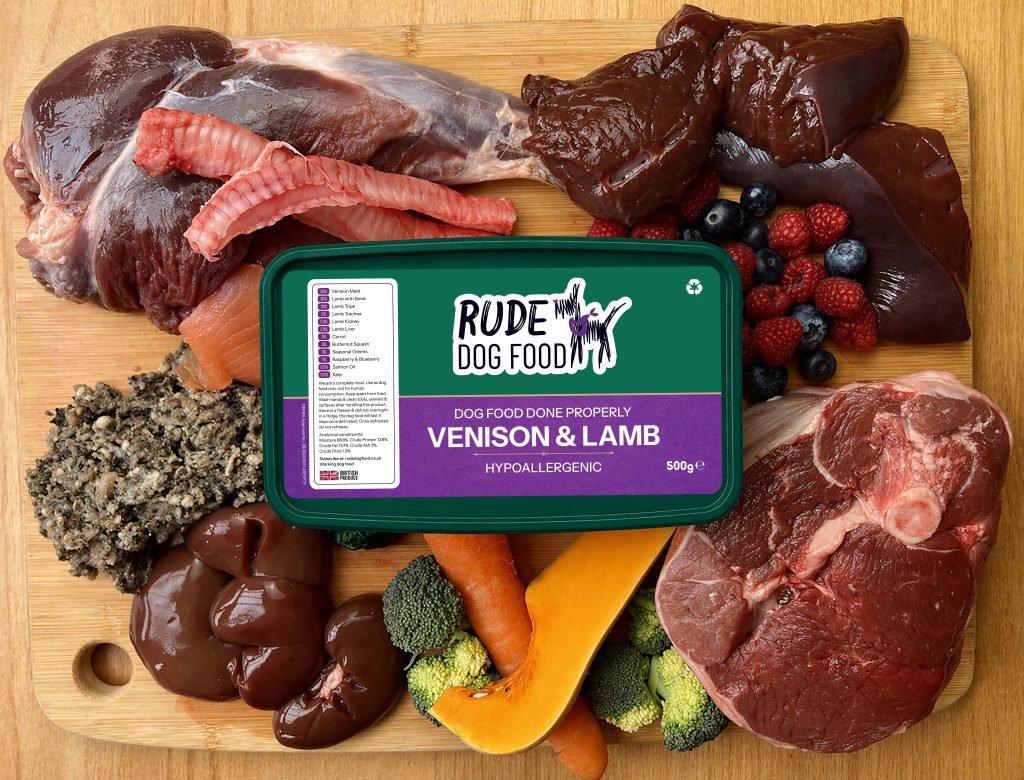
When dealing with food sensitivities, many owners turn to what are known as novel proteins. These include options such as lamb, venison, rabbit and duck.
They are called novel because most dogs have had less exposure to them, especially if they have previously eaten supermarket kibble or wet food that heavily features chicken or beef.
Switching to a protein your dog’s body hasn’t been constantly exposed to can often reduce allergic reactions and allow the digestive system to settle.
Highly processed diets often contain multiple blended proteins, grains, preservatives and additives. That makes it harder to pinpoint what’s causing a reaction.
A balanced raw diet is naturally simpler. High quality meat, bone and organ in appropriate ratios. No grains. No artificial preservatives. No hidden ingredients.
Our Rude Dog Food meals are complete and balanced, ground to a safe texture and designed to be easy to digest. When you strip feeding back to simple, biologically appropriate ingredients, many dogs thrive.
Food allergies are not always dramatic. More often they show up as ongoing low level issues such as persistent itching, inflamed ears, loose stools, excessive gas or a dull coat.
If these problems keep returning, it may be worth looking at what’s in the bowl.
If you suspect a food sensitivity, a gradual transition to a single novel protein is usually the best place to start. Keep things simple and give your dog time to adjust. Improvements often take a few weeks rather than a few days.
Many of our customers notice calmer skin, better digestion and improved coat condition once they simplify their dog’s diet and move away from heavily processed food.
Managing allergies can feel overwhelming, but often the solution is not complicated. Clear ingredients. High quality proteins. No fillers.
That is the approach behind every Rude Dog Food meal.
Because when you remove the guesswork from feeding, you give your dog the best chance to feel comfortable, settled and truly well.

 Your Cart