Watching your dog grow older is a bit like watching your parents finally learn how to use emojis, it’s bittersweet. They’ve been with you through thick and thin, and now they’re slowing down, snoozing more and perhaps struggling a little with stairs or stiff joints. While ageing is inevitable, how your dog ages isn’t.
If your dog’s been on kibble their whole life, you might think, “Well, they’ve made it this far, why change now?” But here’s the thing: raw feeding isn’t just for puppies and middle aged fitness fanatics. Switching your senior dog to a fresh, species appropriate raw diet can help them feel better, move more easily and live healthier, even in their twilight years.
Let’s break down why raw feeding might just be the best thing you do for your older dog.
Like with humans, age is just a number, until it’s not. Senior status varies depending on breed and size. Larger breeds hit their golden years a bit earlier, usually around 8. Smaller breeds might not slow down until 9 or 10. Being fed a fresh diet since puppyhood can increase their health span beyond this.
Regardless of breed, once your dog hits the senior threshold, their nutritional needs start to change. Their joints need more support, their teeth need more love, and their digestion needs to work a bit less hard. And spoiler alert, raw food helps with all three.
Let’s not sugarcoat it: kibble is ultra processed, packed with carbs, low in protein and full of synthetic fillers. It’s like feeding your nan a packet of Monster Munch and expecting her joints to thank you.
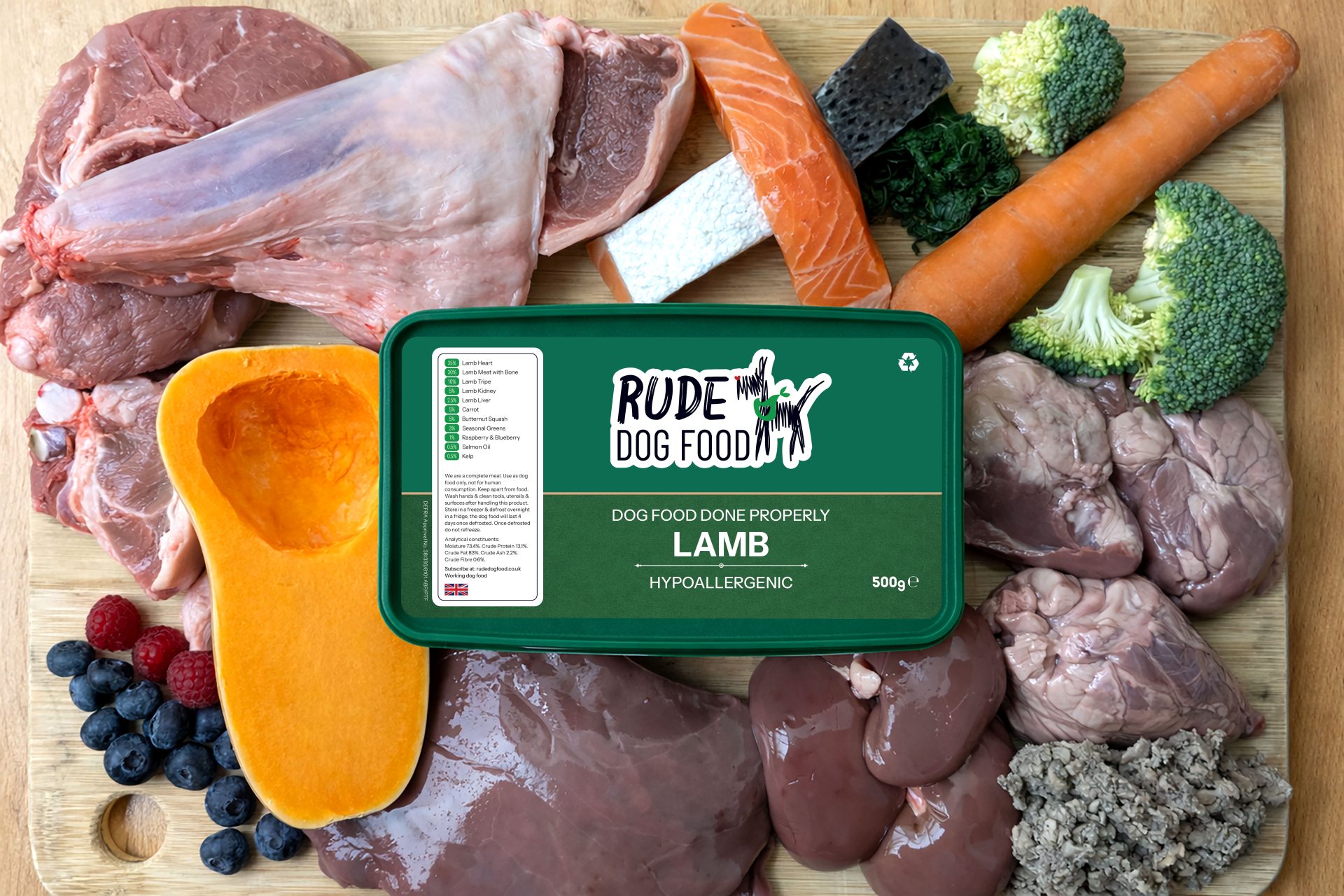
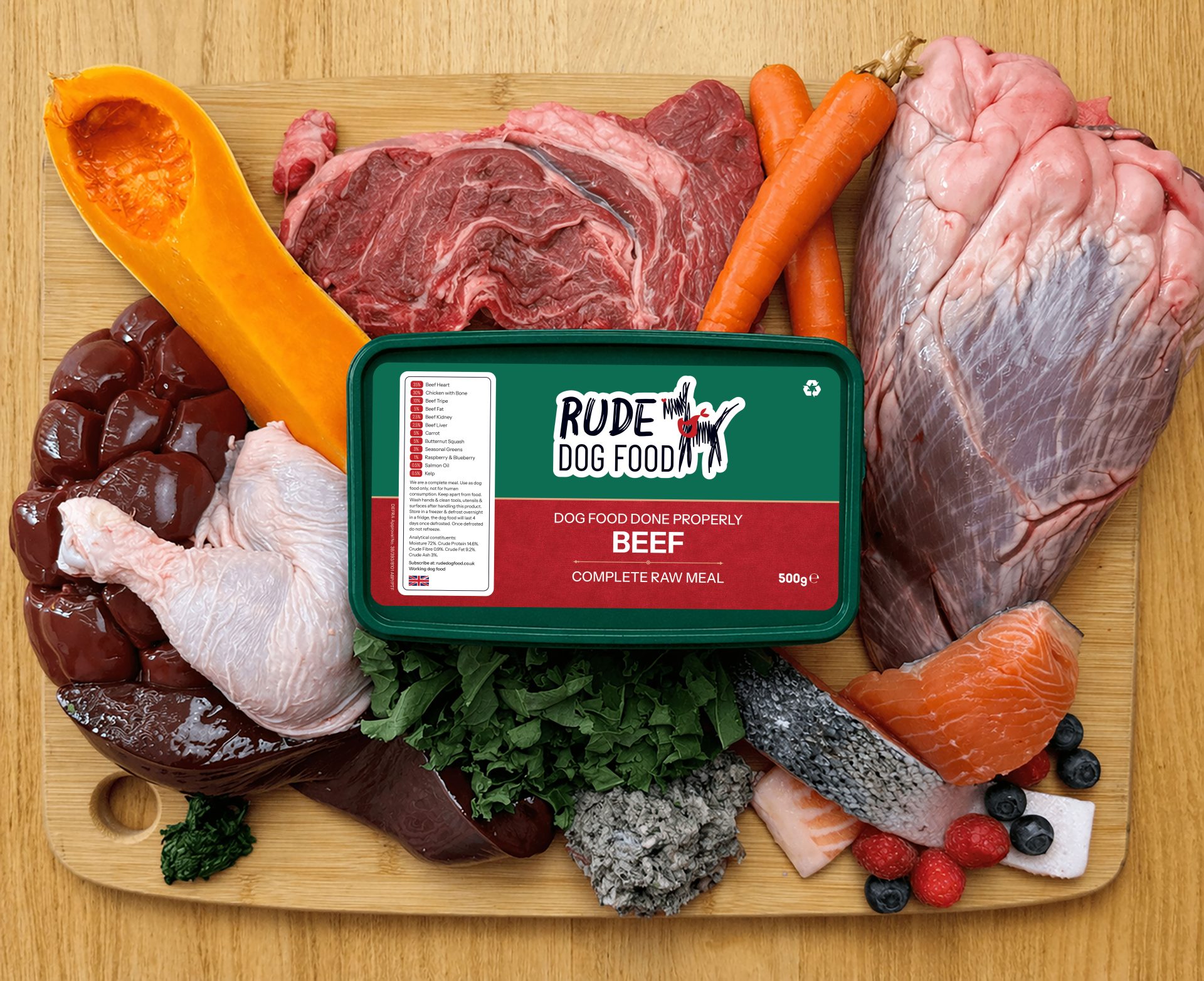
Raw food, on the other hand, is the real deal. Fresh meat, bones, organs and a small amount of veg provide everything your senior dog needs in a form they can actually digest and use. No mystery powders. No synthetic vitamin sprays. Just real food, as nature intended.
Joint issues are one of the biggest struggles for ageing dogs. Arthritis, stiffness, reduced mobility, it’s no fun for them or for you. But here’s the good news: switching to a raw diet can help reduce inflammation and give those creaky joints a bit of relief.
Our complete meals and 80 10 10 blends at Rude Dog Food include raw bone, which is a fantastic natural source of calcium and phosphorus. These two minerals are essential for maintaining bone strength, especially in dogs who’ve spent years launching themselves off sofas and chasing tennis balls they never planned to return.
Raw feeding also helps with weight control. Since raw food is higher in protein and lower in carbs, it keeps your dog leaner, reducing pressure on sore joints and making movement more comfortable. A few fewer kilos means a world of difference when it comes to those slightly slower zoomies around the garden.
Let’s face it, your senior dog’s teeth aren’t what they used to be. Years of chomping kibble hasn’t exactly left them with a Hollywood smile. And here’s the kicker: that whole “kibble cleans teeth” thing? Total myth.
Think about it. Crunching on biscuits doesn’t clean your teeth, so why would it work for dogs?
Kibble is loaded with carbs, which stick to teeth and create the perfect playground for bacteria. This leads to plaque, tartar and eventually gum disease. Not great.
Raw food helps prevent all that. Because raw diets are low in carbohydrates, there’s nothing sticky left behind. Fresher breath, cleaner teeth and far fewer trips to the vet for a dental scale and polish.
We expect our older dogs to slow down a bit, but if they’re sleeping all day, struggling to keep up on walks or just not themselves anymore, it might be time to look at what’s in their bowl.
Raw food is easier to digest and far more nutrient dense than cooked or processed food. This means your dog absorbs more of the good stuff, vitamins, minerals, amino acids, without the digestive struggle that often comes with kibble.
Plus, a balanced raw diet gives them quality energy without the blood sugar spikes and crashes. So while they might not be tearing up the dog park like a two year old again, they’ll have a steadier, more consistent level of energy throughout the day. No more post dinner food comas or energy dips by 3pm.
Protein is the building block of muscle, and your dog needs it even more as they age. Raw diets are naturally high in quality, animal based protein that helps maintain muscle mass, which is crucial for keeping your dog mobile and strong.
Kibble? Not so much. Most of its protein comes from questionable sources like meat meal and soy, and it’s often paired with a mountain of carbs that your dog just doesn’t need.
Worried about upsetting their stomach? Don’t be. Most senior dogs transition to raw with no issues, especially when it’s done right.
Here’s an easy four day transition plan:
Keep an eye on their digestion, stools and general energy. If they seem a bit off, slow the transition down over a week instead. It’s not a race; it’s about doing what’s best for your dog.
The best advice is to start, you wouldn’t want your last years spent eating the same bland biscuits, nor does your dog. It’s time to give them a fresh dog food diet.

 Your Cart