If you’ve ever stood in the pet food aisle staring at bags of brightly coloured biscuits and thought, “Surely this can’t be right,” you’re on to something. The modern dog food industry has done a brilliant job convincing people that a diet made in a factory and stored on a shelf for a year is somehow ideal for a species designed to eat meat, organs, bones and fresh produce.
Let’s break down the reality. Raw feeding gives your dog the nutrients they’re built to thrive on. Hyper processed food gives them… well, the same experience you would have living off ready meals and powdered milkshakes.
Here’s the real difference, without the sugar-coating.
What Actually Is Hyper Processed Dog Food?
Most dry food is made the same way breakfast cereal is. Ingredients are heated, ground, pressurised, heated again, forced through an extruder, cooked a third time, sprayed with fats, then placed in a bag to sit comfortably on a shelf until someone buys it months — or years — later.
During this process, natural nutrients are destroyed. Manufacturers then add synthetic vitamins to make up for it. It’s like burning your dinner and sprinkling a multivitamin on top.
Hyper processed dog food is convenient, sure. Nutritious? That’s where things get shaky.
What Raw Feeding Actually Means
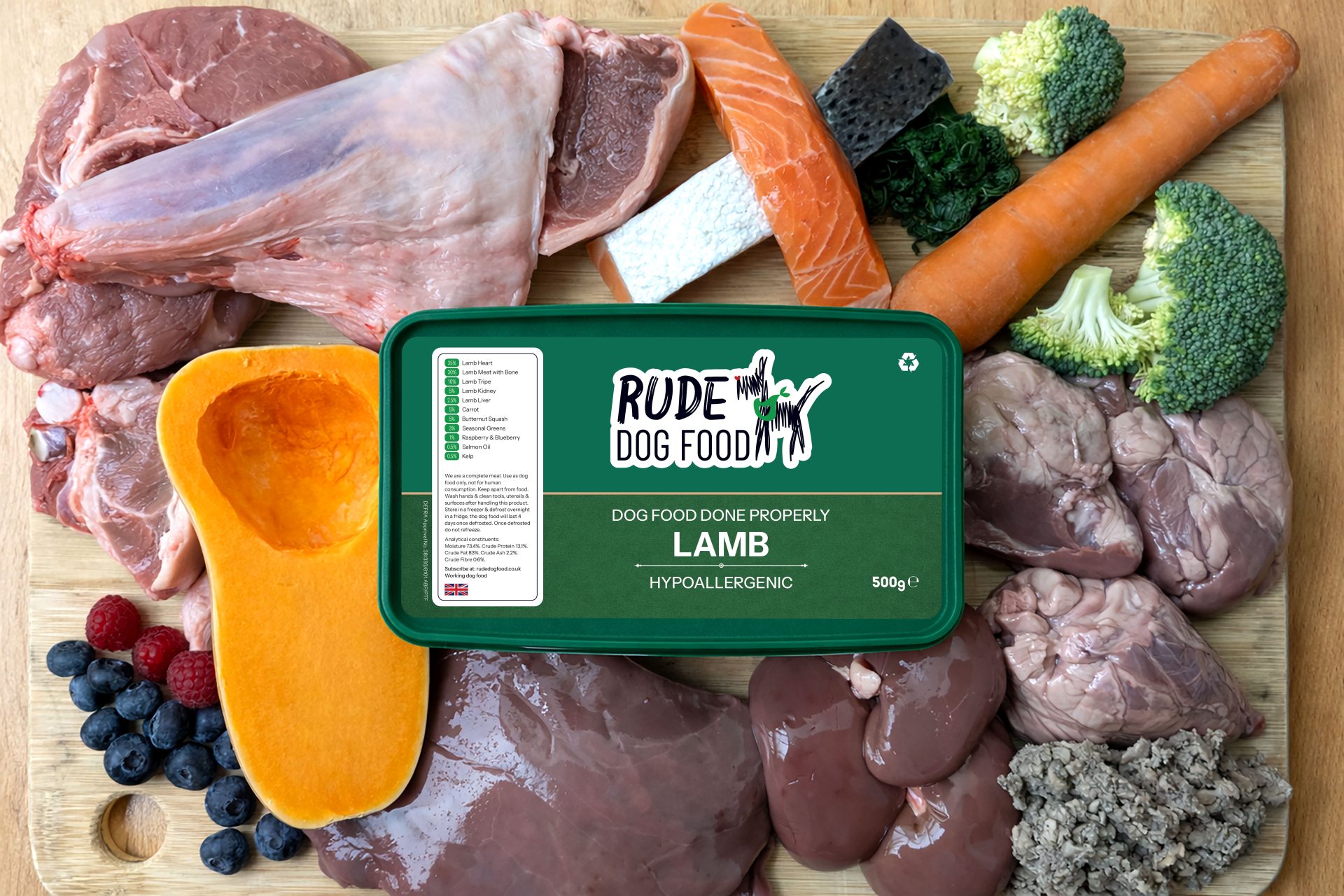
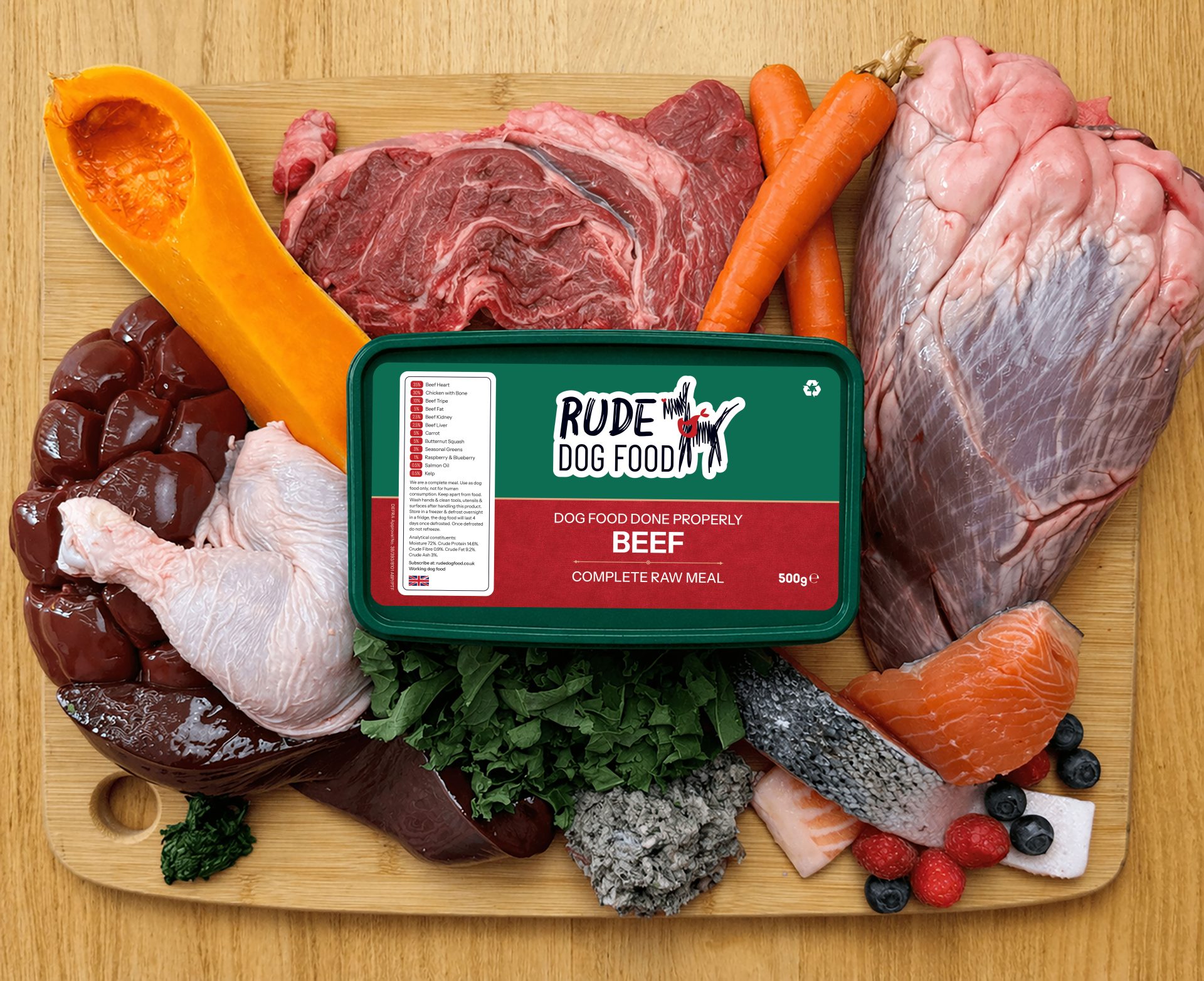
Raw feeding is simple. Fresh meat. Fresh offal. Fresh bone. A bit of fruit and veg, but only enough to be species appropriate. No fillers. No grains. No powdered “meat meal.” No chemical words you can’t pronounce.
It is the closest your dog can get to the diet their digestive system was designed to handle. They absorb more nutrients, digest food more efficiently, and avoid the inflammatory ingredients that sit at the heart of so many modern canine health issues.
Digestibility: Less Waste, More Nutrition
One of the biggest differences you’ll notice between raw feeding and hyper-processed diets is what comes out the other end. Dry food creates bulky, smelly, mushy stools because most of it isn’t usable nutrition; it’s fillers.
Raw feeding produces smaller, firmer, less smelly poos because your dog is actually using what they eat. This isn’t just nicer for you. It’s a sign their gut is working the way it should, and their body is absorbing nutrients instead of fighting to process them.
Behaviour, Mood and Energy Levels
Diet affects behaviour just as strongly in dogs as it does in humans. Hyper-processed foods often lead to: • spikes and crashes in energy • hyperactivity • irritability • poor focus during training
Raw feeding stabilises blood sugar, nourishes the gut microbiome and supports steady, balanced energy throughout the day. Dogs on raw diets often show: • calmer behaviour • improved focus • better sleep • more satisfying and less destructive chewing
Many owners don’t just see a healthier dog; they see a happier one.
Skin, Coat and Allergies
Here’s where the difference becomes impossible to ignore.
Raw feeding, on the other hand, gives dogs: • glossy coats • healthy skin • reduced inflammation • fewer allergy flare-ups
A shiny coat isn’t vanity. It’s a sign the body is functioning properly.
Teeth, Breath and Oral Health
Dry food doesn’t clean teeth. It never has. If hard food cleans teeth, eating crackers would count as dental care.
Raw feeding leaves far less residue behind. Add in raw meaty bones, and you’ve got natural plaque removal, healthier gums and fresher breath without dental sticks full of artificial flavourings.
Long-Term Health
A raw diet supports: • stronger immunity • improved joint health • better digestion • reduced risk of inflammatory conditions • healthier weight • stable blood sugar
Hyper-processed diets, unfortunately, are linked with many of the chronic issues vets see every day, particularly gut problems, skin complaints, obesity and dental decay.
Give the body the fuel it’s meant to run on, and it performs better. It really is that simple.
Transparency vs Guesswork
Raw feeding shows you every single ingredient. You know exactly what your dog is eating.
If you wouldn’t accept that in your own dinner, why would you accept it for your dog’s?
The Verdict
Raw feeding isn’t a fad. Hyper-processed food is.
Dogs evolved to eat real, fresh, unprocessed food. When you give them what their body recognises, they thrive. When you give them what’s convenient for us instead of what’s appropriate for them, problems eventually follow.
A raw diet supports better health, better behaviour and a better quality of life from puppyhood to old age.
Fresh food wins every time.
Join the family
Lorem ipsum dolor sit amet consectetur. Suscipit ultricies nibh aliquam feugiat pharetra scelerisque pharetra nunc quis.


 Your Cart