If we want to understand what dogs should eat today, we first have to ask what they ate before farming ever existed. Long before dog food came in colourful bags and before “complete and balanced” meant a list of ingredients you can’t pronounce, dogs were thriving on what nature intended raw, fresh food.
Let’s take a step back in time.
Back to the Beginning
Around 30,000 to 40,000 years ago, long before anyone thought of ploughing a field or milking a cow, humans and the ancestors of dogs began their partnership. It wasn’t born in a kitchen or a kennel; it started around the campfire.
At this point, humans were hunter-gatherers. We didn’t have farms, bread, or cereal. No rice, no maize, no tinned stew. Just spears, fire, and what the land provided. And it was here, among the scraps of meat and bones left over from the hunt, that wolves began to linger.
Over generations, these wolves became less fearful, hanging closer to the firelight and closer to us. In return, humans found value in their keen senses and loyalty. What started as convenience grew into companionship, and the dog as we know it was born.
What They Ate, and Why It Mattered
So what did these early dogs actually eat? Raw meat, bones, organs, and the occasional handful of vegetation — the same things their wolf ancestors thrived on. The remains of deer, elk, bison, and other prey animals formed the bulk of their diet.
Think about it. These dogs weren’t queuing up for pellets of compressed grain and filler. Their meals were fresh, species-appropriate, and packed with nutrients straight from nature.
This diet provided everything they needed to survive and thrive:
Protein for muscle growth and repair.
Fat for energy and insulation.
Vitamins and minerals from organs and connective tissue.
Natural hydration from fresh meat, not from a water bowl after every meal.
And what they didn’t eat was just as important. No wheat, corn, rice, or soy. No artificial preservatives, colourants, or “meat derivatives.” Just real food.
The Arrival of Farming and Processed Food
Fast-forward to about 12,000 years ago, when humans began farming. Suddenly, our diet changed and so did our dogs’. We started growing grains, keeping livestock, and eventually using by-products from our own food to feed them.
Dogs went from eating prey animals to eating whatever was left over. As humans became more industrial, so did dog food. By the 20th century, convenience took over. Instead of fresh meat, dogs were being fed highly processed kibble, food that had to be cooked at extreme temperatures, shaped into pellets, and stored for months.
It was efficient, sure, but it wasn’t natural.
Dogs didn’t evolve to digest large amounts of carbohydrate or plant matter. They’re carnivores, built for meat, not muesli. Their teeth, jaws, and digestive systems all tell the same story: they’re designed to tear, crunch, and process raw animal tissue.
The Science of Going Back to Basics
Modern research continues to confirm what history already showed us. Dogs thrive on a raw diet, the kind of food they’ve eaten for tens of thousands of years.
Studies from the University of Helsinki found that dogs raised on raw diets had fewer digestive issues, fewer allergies, and healthier coats. Puppies fed raw food even had a lower risk of developing inflammatory bowel disease later in life.
The evidence keeps pointing in the same direction: when you feed your dog food that resembles what their body evolved to eat, they simply do better.
Cleaner teeth, smaller stools, healthier skin, and steadier energy levels, all from a diet that’s more natural, not more complicated.
What “Raw” Really Means
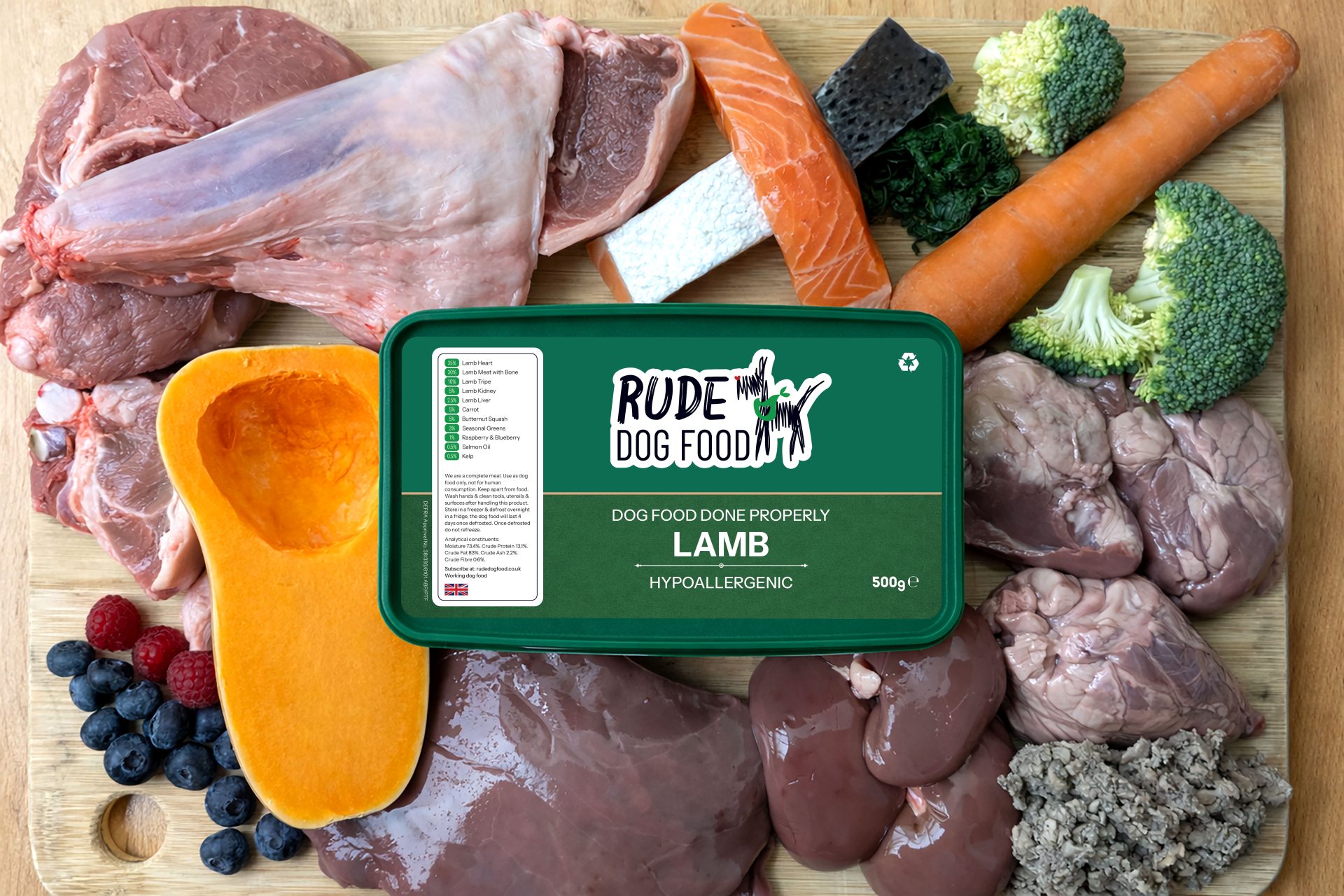
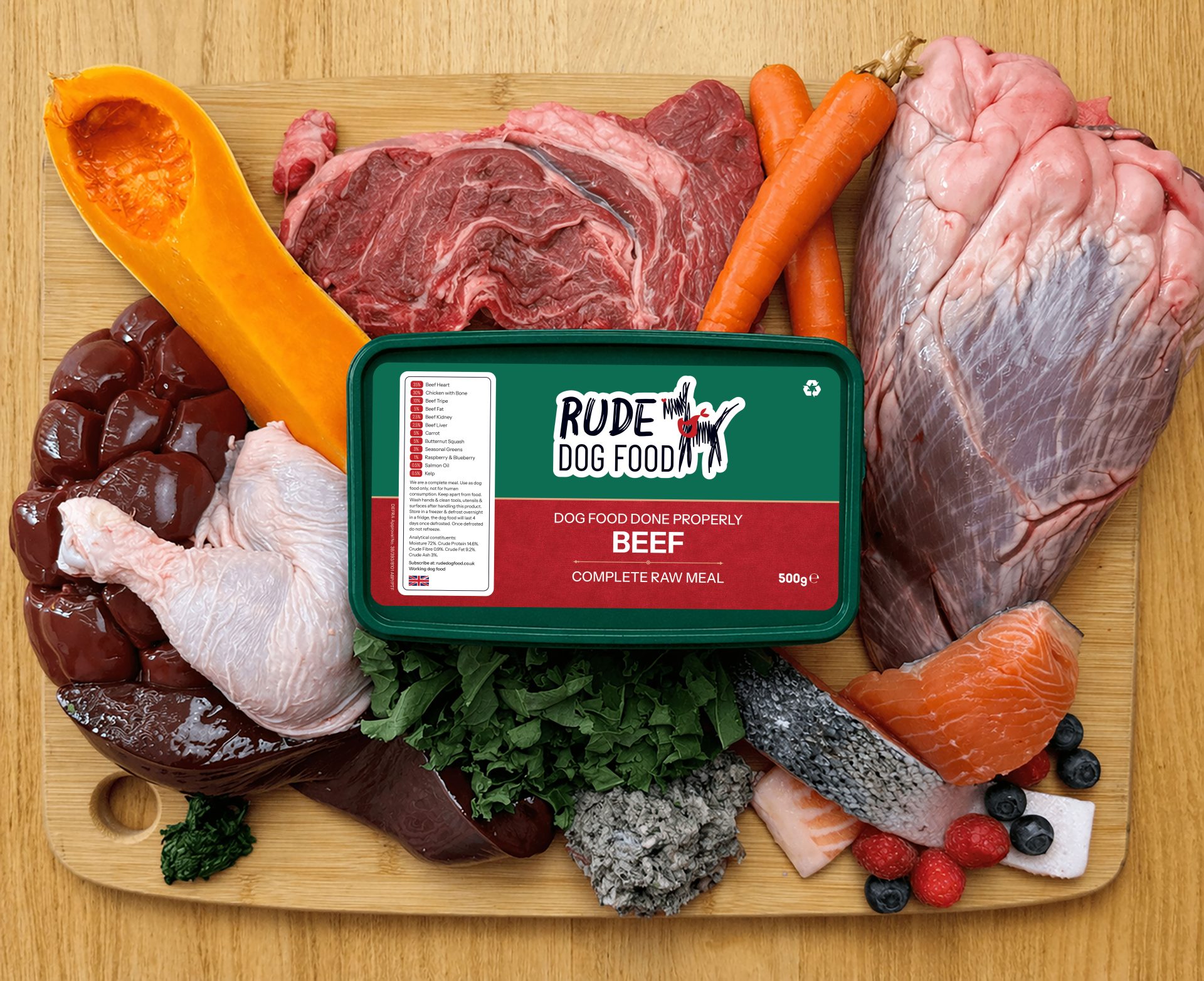
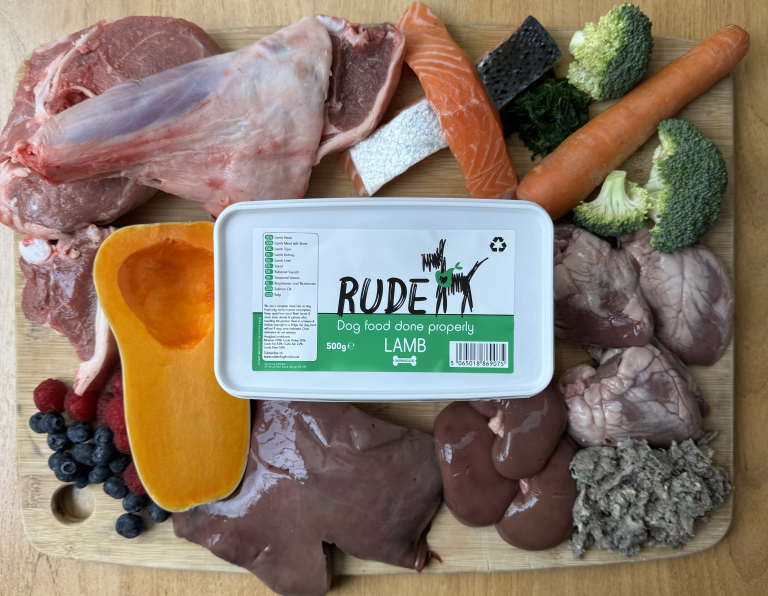
When we say “raw,” we’re not talking about scraps or guesswork. We’re talking about high-quality meat, offal, and bone in the right ratios, food designed to fuel your dog’s body exactly as nature intended.
At Rude Dog Food, we don’t believe in shortcuts. That’s why we use:
High-quality ingredients: only premium cuts of meat, offal, and veg. No waste products, no cheap fillers, no nonsense.
Transparency: we show you exactly what’s in every meal, right down to the 0.5%.
British produce: all of our meat comes from hardworking British farmers who care about animal welfare and quality.
Purpose: a portion of every sale supports the National Foundation for Retired Service Animals because good dogs deserve good food and a good life.
That’s what sets true raw feeding apart, it’s not just “uncooked” food. It’s real, carefully balanced nutrition.
The Natural Evolution of Nutrition
Look at your dog. Whether they’re a sprightly spaniel or a snoozing Labrador, their DNA still traces back to those early campfire companions. Their digestive system hasn’t suddenly evolved to handle grains or fillers just because it’s 2025.
A raw diet isn’t a fad, it’s a return to what’s always worked. It’s not trendy, it’s timeless.
Feeding your dog raw isn’t about making them wild again. It’s about giving them the food their body recognises, in a world that’s forgotten what real food looks like.
When you see your dog’s coat shine, their teeth stay clean, and their energy levels balance out, you’ll understand why this isn’t some “alternative” way of feeding, it’s the original.
Back to Where It All Began
So, what did dogs eat before farming began? They ate raw, fresh, natural food, meat, organs, bone, and a little vegetation. Nothing artificial, nothing overcomplicated.
And here’s the thing, after 30,000 years, nothing about their biology has changed. Only the food we give them has.
Feeding raw is about getting back to that simple truth. It’s not about trends or marketing. It’s about respecting nature, respecting your dog, and trusting what history has already proven: Real food works. Always has, always will.
Join the family
Lorem ipsum dolor sit amet consectetur. Suscipit ultricies nibh aliquam feugiat pharetra scelerisque pharetra nunc quis.
 Your Cart