When people think about sustainability, they often picture electric cars, recycling bins, and reusable coffee cups. But what about your dog’s dinner? It’s not usually the first place people look when thinking about the environment, but the truth is, what you feed your dog has a much bigger environmental footprint than most realise. So, is raw feeding more sustainable? Let’s break it down properly.
The Problem with Processed Dog Food
Most commercial dog food is made using industrial methods that rely on heavy processing, imported ingredients, and high energy consumption. Kibble, for example, requires multiple stages of cooking, drying, and packaging. Each step uses energy and resources, and the result is a heavily processed product that’s far removed from what dogs are naturally built to eat.
Many of these ingredients travel thousands of miles before reaching a bowl, often coming from low-welfare, mass-produced meat sources or overseas suppliers where sustainability standards are less stringent. Add to that the plastic packaging that rarely gets recycled, and it’s easy to see that the environmental cost of processed pet food is far from small.
The Raw Feeding Difference
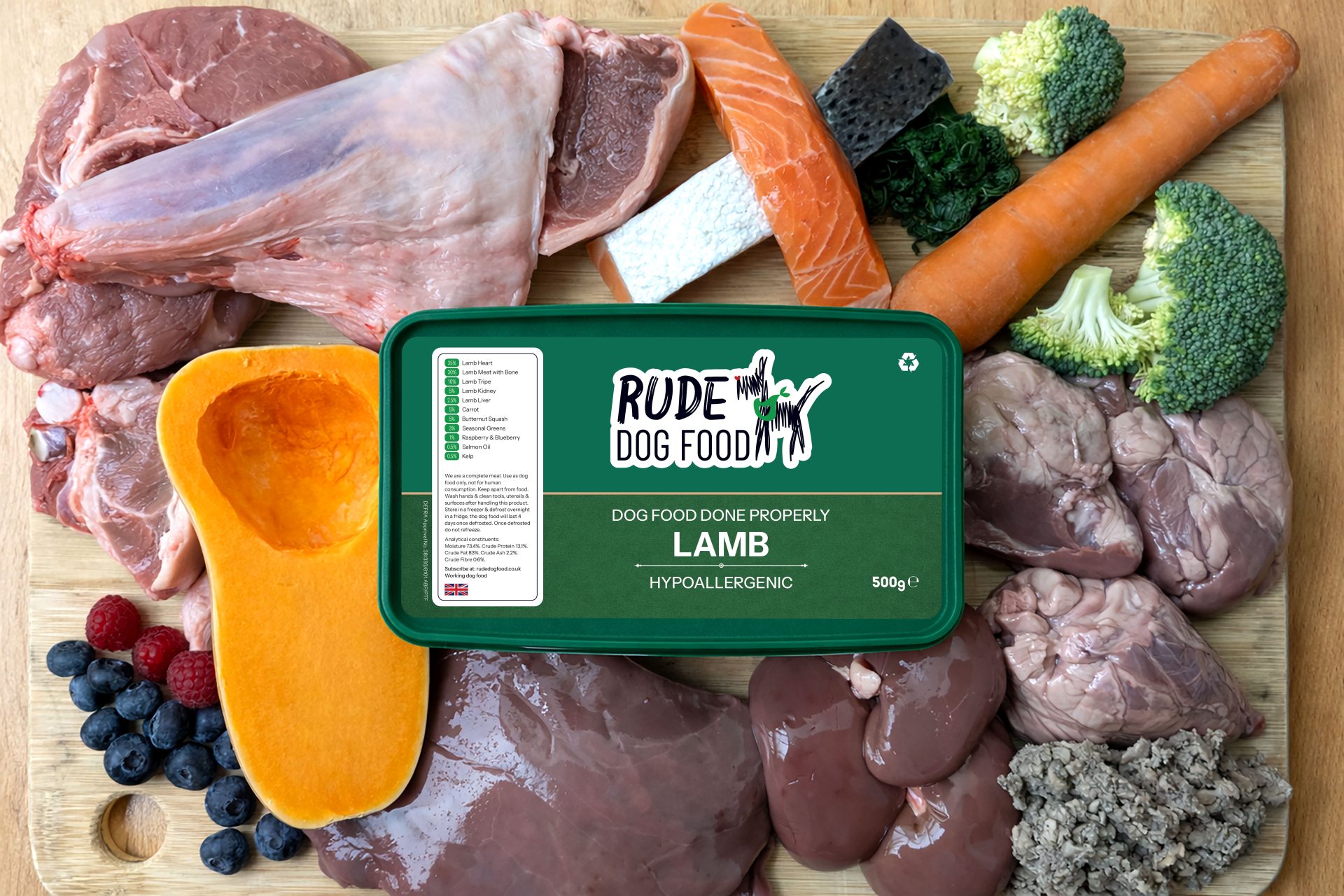
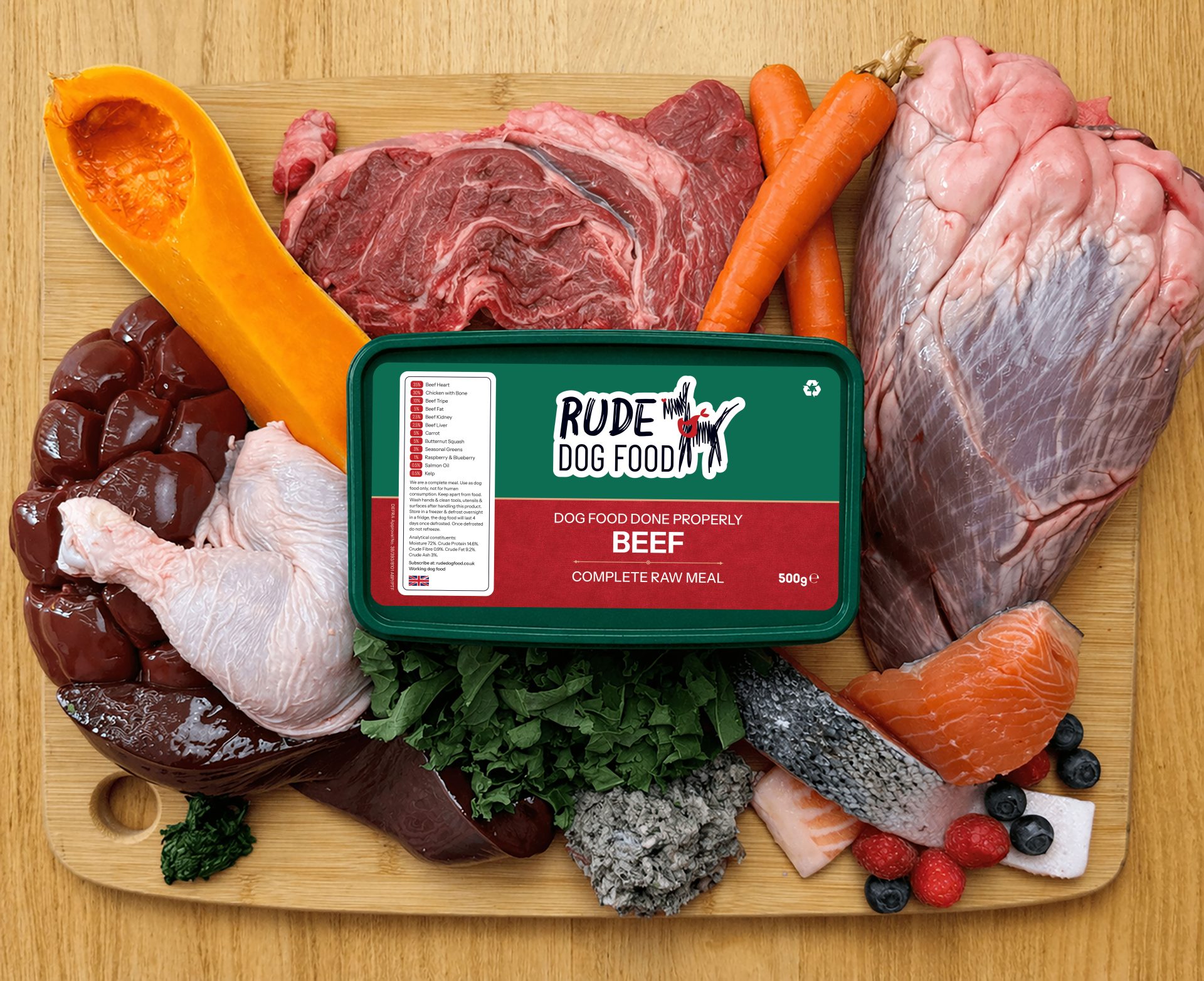
Raw feeding strips all of that away. There’s no unnecessary cooking, no extrusion, and no chemical preservatives, just fresh, real ingredients. Because raw food isn’t processed in the same way, it requires less energy to produce and fewer synthetic additives to make it shelf-stable. What you see is what you get: whole meat, organ, bone, and a touch of fruit and veg, all used in their natural form.
When you buy from a company that sources responsibly, you’re not only feeding your dog better, you’re supporting a more localised and sustainable supply chain. At Rude Dog Food, for instance, all of our ingredients are British. This isn’t just about supporting farmers, it also means fewer food miles, better traceability, and higher welfare standards.
Waste Not, Want Not
Raw feeding also makes use of parts of the animal that would otherwise go to waste. Organs, bones, and certain cuts that aren’t typically used for human consumption still contain valuable nutrients and can form the foundation of a perfectly balanced raw meal. That’s sustainability in action, using more of the animal and reducing waste from the meat industry.
It’s a circular approach that benefits everyone. Farmers get more value from each animal, the environment sees less waste, and dogs get a meal that’s biologically perfect for them. That’s a win across the board.
Packaging That Makes Sense
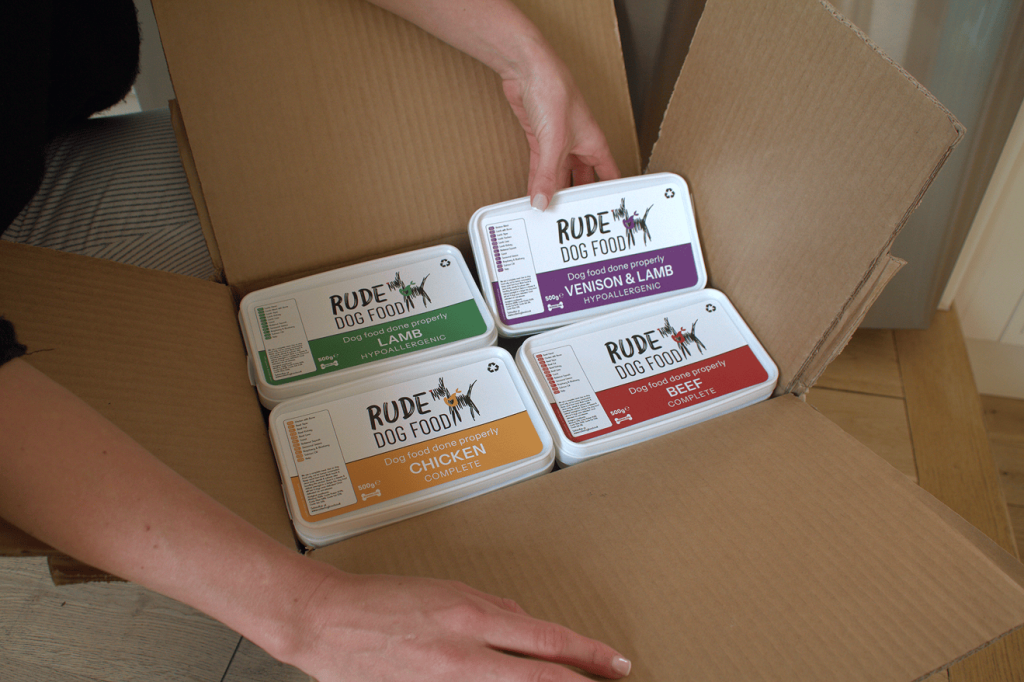
Another often-overlooked factor is packaging. Traditional dog food usually comes in large plastic bags that are rarely recyclable. Raw food, on the other hand, is increasingly being packed using recyclable or compostable materials. At Rude Dog Food, we use Woolcool insulation, a natural, biodegradable material, and recyclable boxes, helping to keep our carbon footprint as low as possible.
Local Sourcing and Lower Transport Impact
Sustainability isn’t just about what’s in the food; it’s about where it comes from. The meat in raw dog food is often sourced locally, especially from suppliers that prioritise quality and welfare over mass production. British-sourced ingredients mean fewer food miles and less dependence on international supply chains.
Compare that to large-scale kibble manufacturers who import cheap meat meal or grain fillers from around the world, and the contrast is clear. By feeding raw, you’re effectively shortening the supply chain and supporting more ethical, lower-impact farming.
Cleaner Bowls, Smaller Footprint
Dogs on raw diets tend to produce less waste, literally. Their bodies use more of what they eat, meaning smaller, firmer stools and fewer environmental pollutants from the production and disposal process. That may sound like a small thing, but it adds up quickly when you think about how many dogs there are in the UK alone.
Fresh Food, Fewer Additives
Most processed foods are full of artificial vitamins, colourings, and preservatives, all of which have to be manufactured, transported, and stored. Raw feeding uses naturally occurring nutrients from real meat and vegetables. No synthetic additives, no high-energy factories, and no chemical preservatives. Just clean food that nourishes your dog and keeps the planet cleaner too.
Feeding with a Conscience
Sustainability doesn’t have to mean compromise. You don’t need to choose between feeding your dog the best and doing what’s right for the environment. In fact, the two go hand in hand. A biologically appropriate raw diet not only gives your dog the nutrition they’re built for, but it also aligns with a more responsible and sustainable way of producing food.
Every step of the raw feeding process, from local sourcing to minimal processing, supports a more balanced system. You’re feeding your dog in a way that respects the animal, the farmer, and the planet.
The Bottom Line
Raw feeding isn’t just better for dogs; it’s better for the environment too. By choosing fresh, locally sourced ingredients over industrially produced kibble, you’re reducing your carbon footprint, cutting waste, and supporting British farmers who prioritise animal welfare.
If sustainability matters to you, then feeding your dog raw is one of the most impactful decisions you can make. Because when you feed naturally, you’re not only doing right by your dog, you’re doing right by the planet they run around on.
Join the family
Lorem ipsum dolor sit amet consectetur. Suscipit ultricies nibh aliquam feugiat pharetra scelerisque pharetra nunc quis.


 Your Cart