Medical conditions affecting the digestive system are really common in dogs. Inflammatory bowel diseases (IBD), such as Crohn’s-type disease or colitis, are among the more frequent chronic gastrointestinal disorders vets see. Often, pet owners contact us wanting to switch their dog over to raw food, but they worry: “Will my dog’s stomach tolerate it, especially if there’s underlying inflammation?”
The truth is, diet is one of the most powerful tools for managing IBD. And emerging research suggests that early life exposure to raw feeding may even influence IBD risk later.
What Is Inflammatory Bowel Disease (IBD) in Dogs?
“IBD” is a catch-all term for chronic conditions in which the intestinal lining becomes inflamed due to abnormal immune or microbial reactions to food or gut bacteria. In dogs, this can lead to:
Vomiting
Diarrhea (often chronic or recurrent)
Weight loss or poor weight gain
Abdominal pain, bloating, discomfort
Though the symptoms can be alarming, once IBD is diagnosed, many dogs can be managed well, either via medications (such as corticosteroids) or (ideally) via diet changes, or a combination of both.
What Makes an IBD-Friendly Diet?
Because the gut of a dog with IBD is more sensitive, diet selection is critical. Key considerations include:
Digestibility: Highly digestible proteins and carbohydrates reduce stress on the inflamed gut.
Balanced fibre and fat: Low to moderate fat levels (often ~8–15 %) are recommended, and soluble fibre can help form firmer stools and support gut health.
Smaller, frequent meals: Splitting the daily ration (for example, 500 g into 2 or 3 meals) helps avoid overloading the gut.
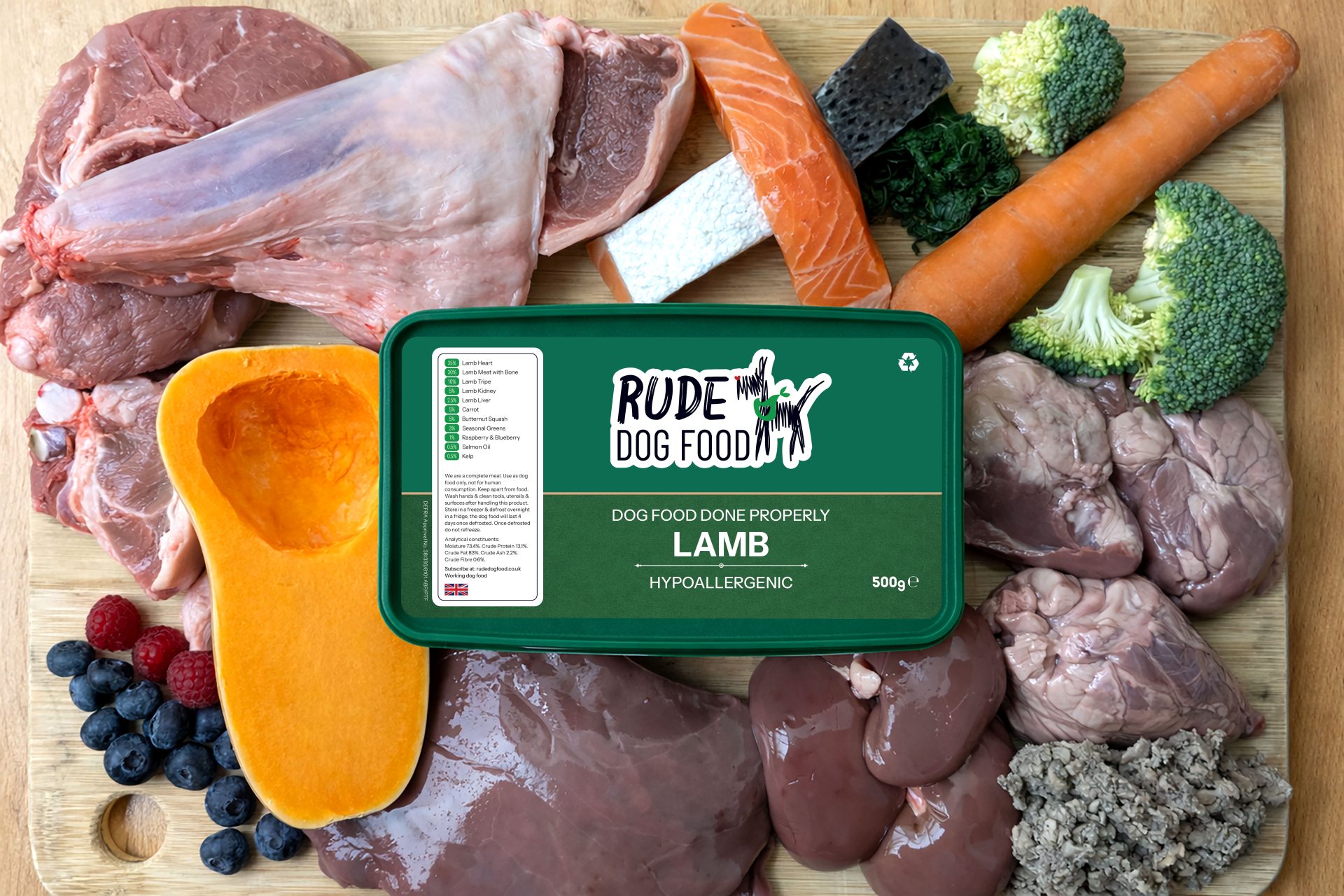
Novel or hypoallergenic proteins: Using proteins such as Lamb and Venison helps reduce the chance of food sensitivities or allergic reactions.
These principles guide many “IBD diets” whether commercial or custom.
Why Consider Raw Food?
Many people assume raw food is too “rich” for dogs with gut sensitivities, but there are several compelling reasons why a well-formulated raw diet may be better tolerated than standard kibble:
Lower carbohydrate load: Kibble tends to rely heavily on grains, starches, or cheap fillers, which may aggravate the diseased gut.
Cleaner ingredient lists: Raw diets frequently use fewer, simpler ingredients, making it easier to isolate triggers.
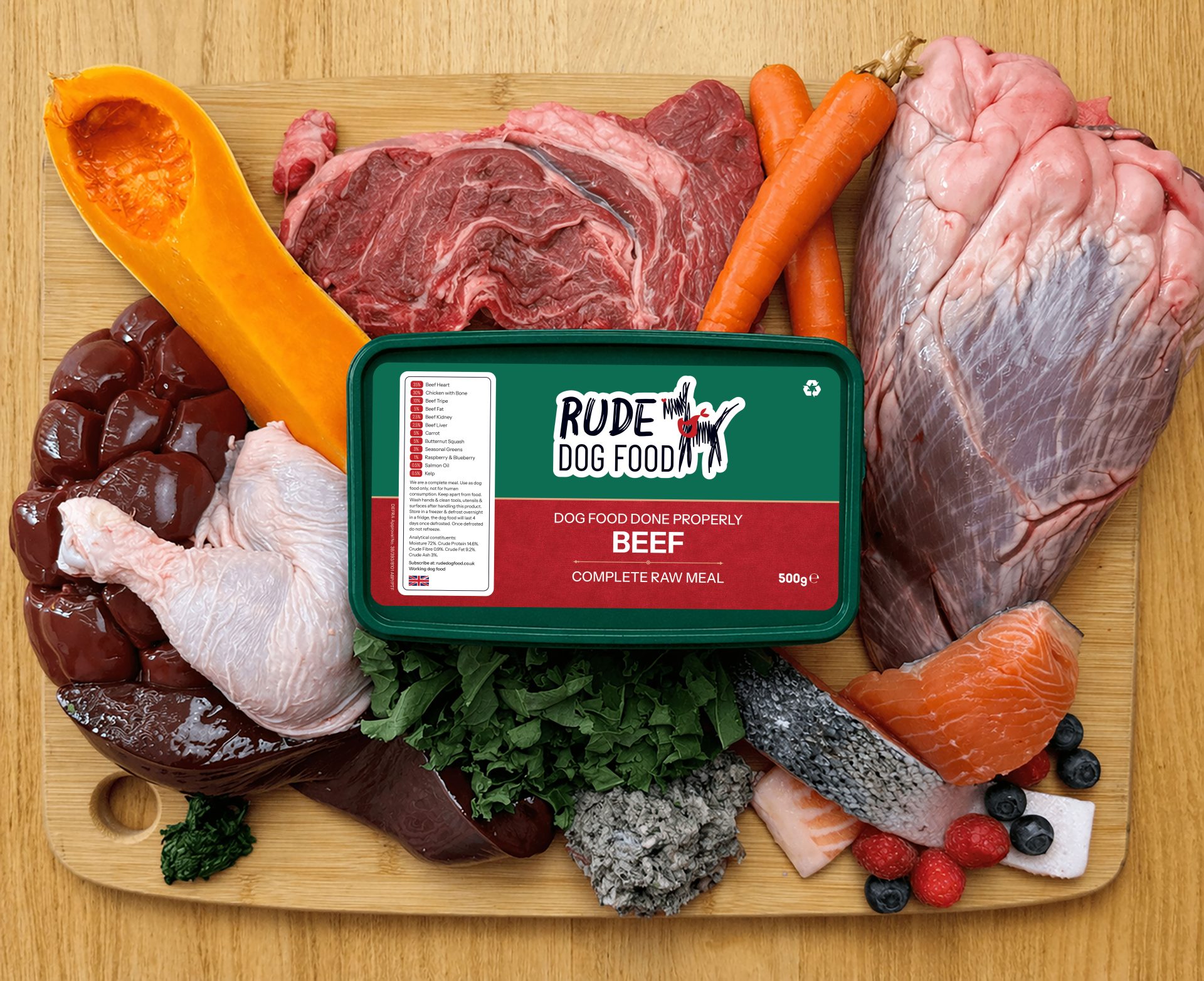
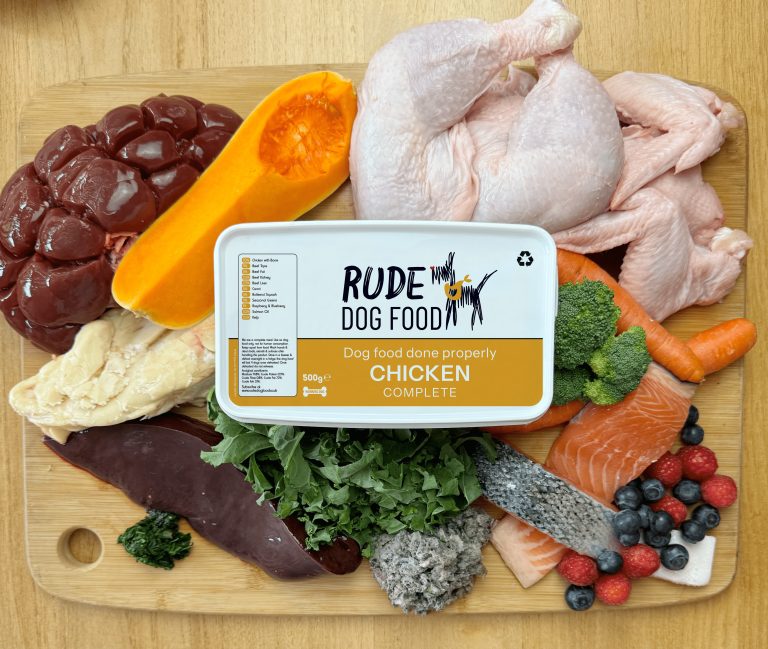
Better protein quality: Some kibbles use “meat meal” or low-grade by-products; raw diets from Rude Dog Food use whole muscle meat, which can reduce allergenic load.
Early life exposure evidence: A particularly interesting study from the University of Helsinki suggests that offering a raw diet to puppies between 2 and 6 months (and even during late suckling) can reduce the risk of developing IBD in adulthood.
In that study, feeding dry (kibble) food earlier in life correlated with a higher incidence of IBD later. Puppies whose dams already had IBD had nearly an 8-fold increased risk of developing IBD themselves, and male pups were 2.1× more likely than females to develop the disease.
Why Choose Rude Dog Food (and Why Our Approach Helps)
At Rude Dog Food, we design our recipes with IBD-supportive principles in mind:
Fiber from digestion-friendly vegetables: Ingredients like butternut squash and carrot supply soluble and fermentable fiber to support gut motility and stool quality.
Wide variety of recipes: This allows you to rotate proteins or switch to a novel source if sensitivity arises.
Full transparency: Every recipe lists its ingredient composition and nutrient breakdown, including exact fat percentage.
Fat control: Because dogs with IBD often benefit from 8–15 % fat, we ensure our meals stay within those limits.
Hypoallergenic / novel protein recipes: Options such as lamb, venison & lamb are designed for dogs with sensitivities.
Fine particle size: Our meals are ground through a 10 mm plate, creating a fine texture that’s easier for the gut to process, especially useful when digestion is already compromised.
By combining a digestible, low–moderate fat, fibre-supportive, and novel-protein approach, we aim to give dogs with IBD a strong nutritional foundation.
How to Transition Safely to a Raw Dog Food Diet
If you and your vet decide raw is an appropriate option, follow a slow, controlled transition:
Adopt a gradual switch over 4–7 days (or slower if sensitivity arises):
Day 1: 25 % raw + 75 % existing diet
Day 2: 50 % / 50 %
Day 3: 75 % / 25 %
Day 4: 100 % raw If any digestive upset occurs, slow the transition.
Monitor stools, appetite, weight, and behavior closely.
The only one more delighted with the results of a raw dog food diet will be your dog!
If at any stage you would like some more support, don’t be afraid to get in touch with us. One of the friendly members of our team would be more than happy to offer some tailored advice!
Join the family
Lorem ipsum dolor sit amet consectetur. Suscipit ultricies nibh aliquam feugiat pharetra scelerisque pharetra nunc quis.

 Your Cart