Itching, scratching, excessive licking, and digestive issues, are all very common allergy symptoms in dogs. However, just because they are common, does not mean that your dog should have to endure unpleasant skin, stomach, or even respiratory issues.
After multiple visits back-and-forth to the vets, you might be feeling a bit disheartened if medications are not effectively stopping the repetitive allergy symptoms. However, you might be surprised to hear that medications might not be the healthiest, or most effective solution.
Because here’s the thing, while meds might mask symptoms, they rarely deal with the cause. You’ve got to look at what’s going in the bowl.
Why Your Dog Might Be Reacting
A quick biology lesson before we dive in. Allergies happen when your dog’s immune system goes into overdrive and flags something harmless, like chicken or pollen, as a threat. The result is inflammation, itching, ear infections, and digestive issues.
There are three common triggers: fleas, environmental allergens, and food. The problem is, they all cause similar symptoms. So unless your dog is visibly covered in pollen or flea bites, it can be hard to figure out what’s really going on. That’s why so many dogs end up being treated for the wrong thing.
Start by watching for patterns. If your dog only struggles during spring, pollen could be the issue. If it happens after meals or is more consistent, food becomes the obvious place to investigate. And that’s where raw feeding gives you the edge.
Kibble's Long Ingredient List Isn't Helping
Still feeding kibble? Turn the bag around and read the ingredients. Most of the time, you’ll find a list of ingredients the length of your arm. Wheat, maize, derivatives, colourings, preservatives. All sorts of stuff that has no benefit to a canine’s health.
This is part of the problem. With so many processed ingredients crammed in, it’s almost impossible to tell what your dog is reacting to. Grain, fillers, and artificial additives are all common triggers. And they’re everywhere in commercial dry food.
Why Raw Food Simplifies Everything
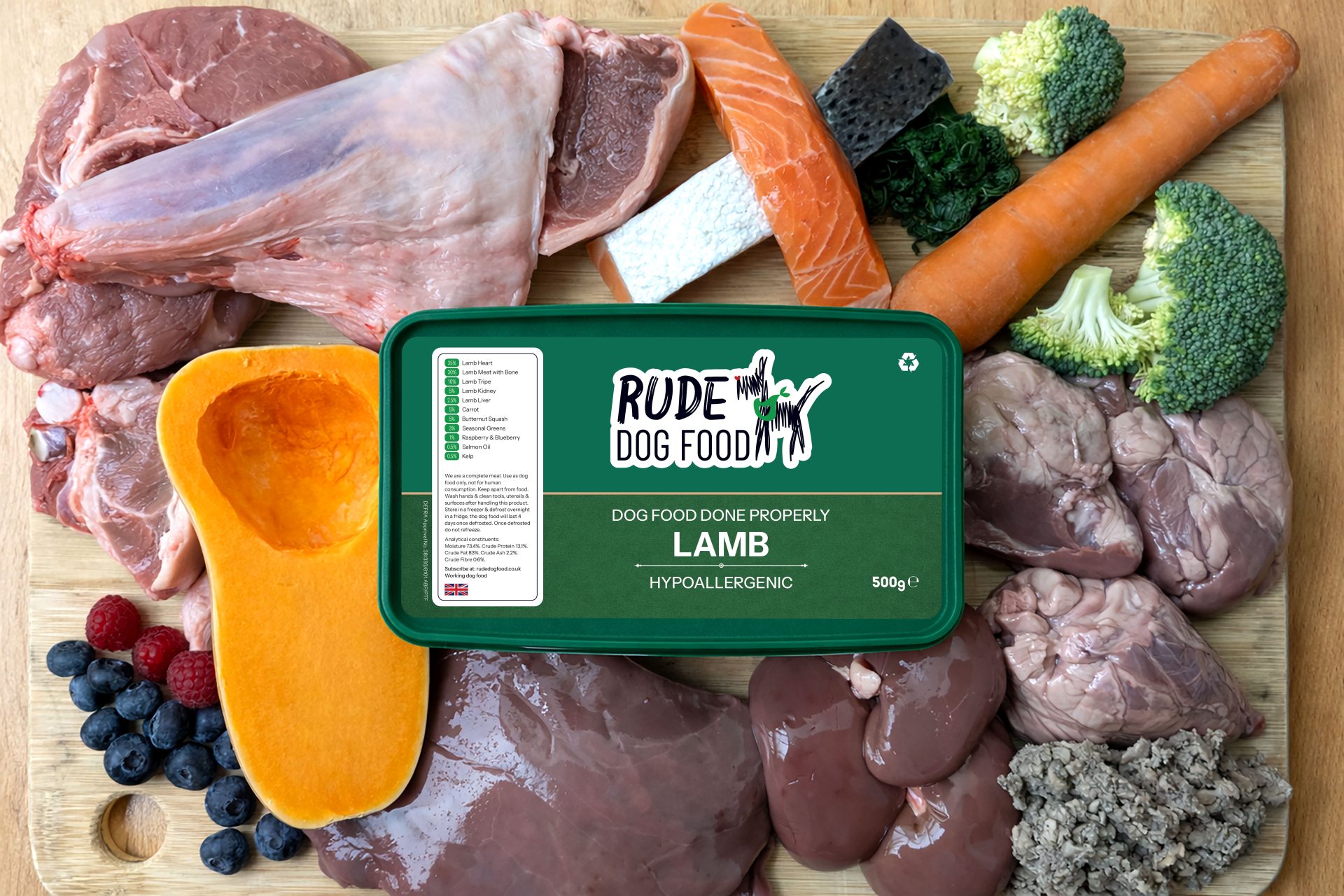
Raw feeding brings everything back to basics. Real meat, real organs, small amounts of vegetables, and nothing else. You know exactly what your dog is eating. That makes it much easier to test things one at a time.
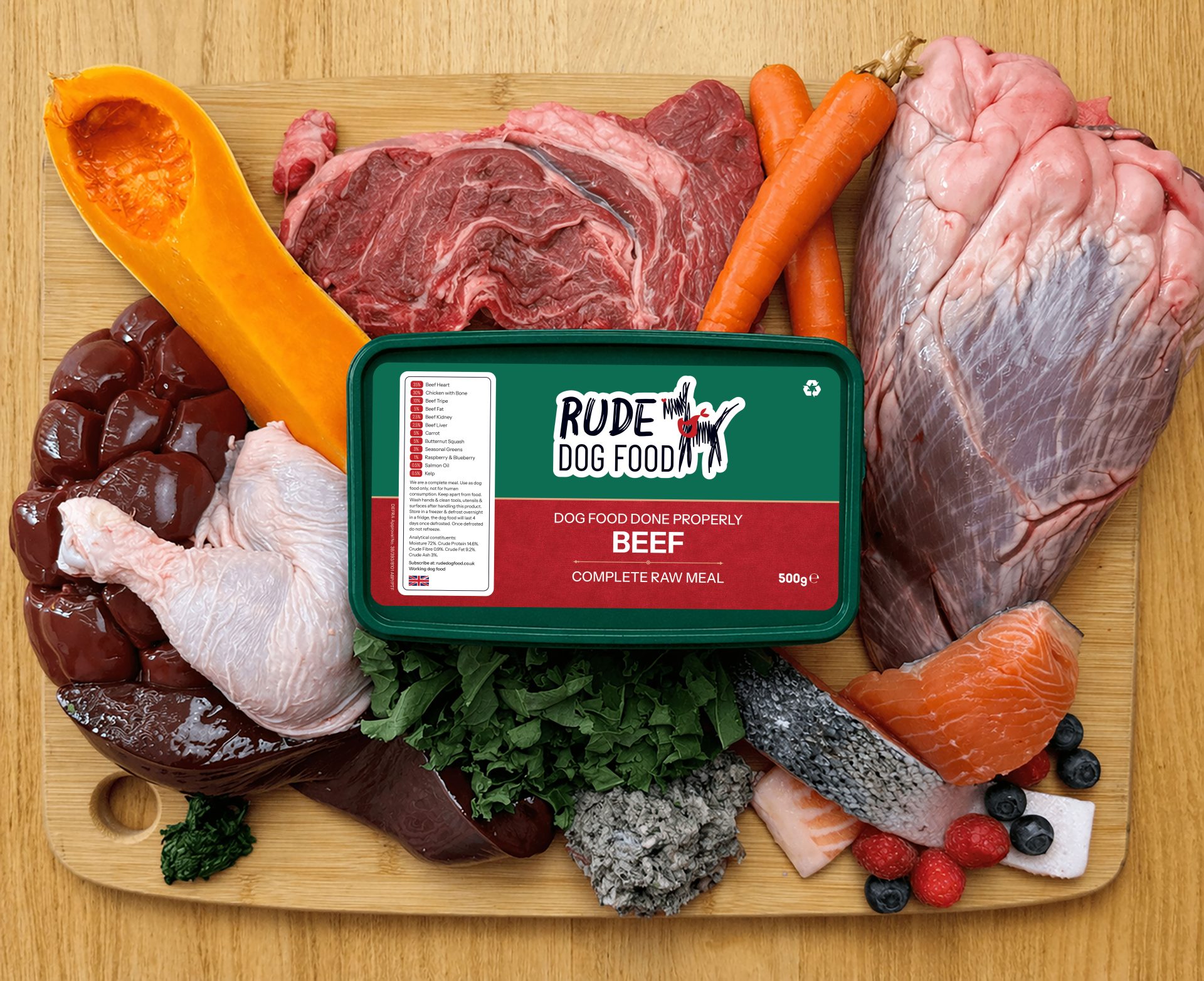
If you suspect beef might be the issue, you can feed a pure beef meal for a few days and see how your dog reacts. If they’re fine, you can cross it off the list. If they’re not, you can avoid it going forward. It’s a much clearer process than guessing your way through a bag of kibble with 40 ingredients.
You also get access to what are known as novel proteins. These are meats like venison, rabbit, or duck that your dog may never have eaten before. Because they’re unfamiliar, your dog’s immune system is less likely to overreact. They’re also easier to digest and can reduce flare-ups in sensitive dogs.
Gut Health and Immune Support
Here’s something most people don’t realise. Around 70 per cent of your dog’s immune system lives in their gut. So if their digestive health is off, their immune response will be too. That means more inflammation, more allergies, and more misery.
A raw diet is gentler on the gut. It’s less inflammatory, easier to break down, and promotes better gut bacteria. That has a direct impact on the immune system. When the gut works properly, the body doesn’t go haywire every time it sees chicken or grass.
How to Make the Switch
If your dog has allergies, don’t rush. Switching too fast can cause more problems. Take it step by step. On day one, try 25 per cent raw with 75 per cent of their usual food. On day two, go to a 50/50 mix. On day three, flip it to 75 per cent raw. By day four, if everything’s going smoothly, you can go fully raw.
Start with a hypoallergenic protein blend like venison and lamb – easily digestible. Keep everything else the same. No treats, no extras, no distractions. That way, if something causes a reaction, you’ll know exactly what it was.
Keep It Simple
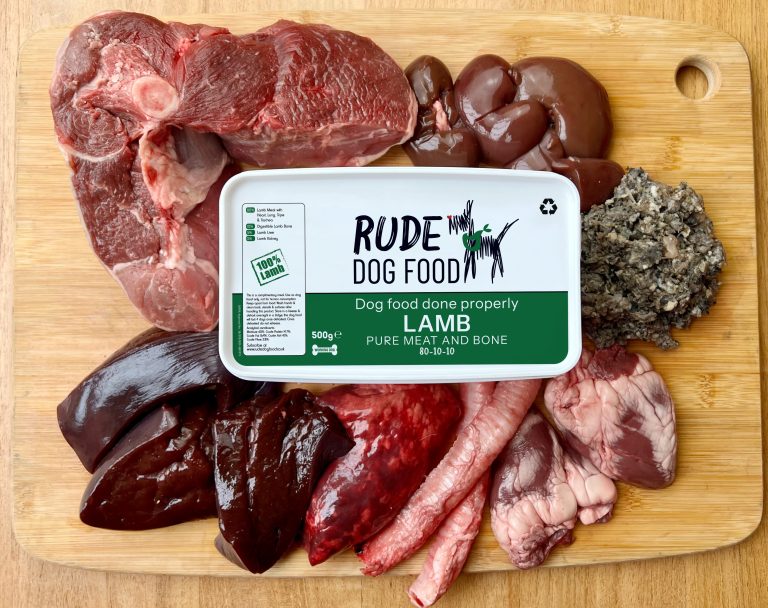
Raw meals are built around a structure that makes sense for your dog’s body. About 80 per cent meat, 10 per cent bone, and 10 per cent organ. Some complete meals include a small amount of veg, usually up to 15 per cent, for fibre and natural nutrients.
If your dog has a sensitive stomach, you might want to stick to pure 80/10/10 blends at first. These contain no plant matter and are often better tolerated by dogs with IBD or allergies. Once you know what works, you can either stay with simple meals or build up to complete ones.
Raw Isn't a Trend
There’s nothing new about feeding dogs what they’re supposed to eat. Before kibble came along, dogs survived on scraps, raw bones, and meat. Their bodies are built for it. What’s new is the idea that ultra-processed food is somehow better for them.
Raw feeding gives your dog the nutrients they need without the extras they don’t. It’s clean, natural, and easier to digest. And when it’s done right, it’s complete. You don’t need to throw in synthetic vitamins or guess what’s missing.
Real Food. Real Results
The improvements speak for themselves. Skin clears up. Coats become glossy. Digestion settles down. Dogs become calmer and more comfortable in their own bodies. You’ll spend less time at the vet, less money on medications, and more time enjoying life with a healthy dog.
If your dog is suffering from chronic allergies and nothing else has worked, food could be the missing link. Try stripping it back. Focus on fresh, raw ingredients. You might be surprised how quickly things start to change.
Join the family
Lorem ipsum dolor sit amet consectetur. Suscipit ultricies nibh aliquam feugiat pharetra scelerisque pharetra nunc quis.



 Your Cart