Why Protein Quality Matters in Raw Feeding
Once you accept one key principle, that dogs are carnivores you begin to understand that their most important macro nutrient is their protein. Or maybe I should say the macro nutrient that occupies the majority of their diet must be protein. You then need to decipher where and how this macro nutrient is absorbed by your furry friend.
Which brings us to our next point, not all proteins are created equal!
That sounds ominous and scary, what I should say is ‘Not all protein sources are created equal’ and what you think is protein may not necessarily be protein.
Let me explain. Firstly it’s important to differentiate between meat content and protein content.
For example, if you have 100grams of chicken breast, that doesn’t mean you have 100grams of protein, you have 31 grams of protein, 3.6grams of fat, 65 grams of water and 0.4gram of Ash (minerals and trace elements).
If you take 100 grams of regular minced beef, you have 17grams of protein, 20grams of fat, 62 grams of water and 1 gram of ash.
This is why an extremely high meat content is necessary for your dog to consume the necessary amount of their most important macro nutrient, PROTEIN.
This water content is also extremely important for healthy digestion of these macronutrients. After all, mammals are made up of between 60%-70% water so it’s no wonder water content in food is so important. Real foods with real moisture levels help maintain hydration, aid a smoother digestion, reduce digestive discomfort and ensure that enzymes and stomach acids function optimally.
Animal vs Plant-Based Protein
I didn’t ever think I would have to address this when writing about dog nutrition. But I think it’s best we get this out of the way and then we can compare different types of animal protein sources against each other.
Dogs are carnivores, meaning their bodies are designed to digest and utilize animal protein. They have evolved this way over arguably, tens of thousands of years. The small amounts of vegetation they consume would have been eaten via the innards of their prey’s stomach and bowels, not from cultivating Soy.
Hyper processed vs Natural Protein Sources
When something is cooked to a high temperature, the proteins in the food denature. Essentially the protein structure changes and becomes less digestible. This is the case with dry and cooked food.
A dog’s digestive system has evolved eating and to eat raw food. Food in its most easily digestible state is of course preferable when choosing between protein options. So make sure you are feeding RAW.
So what source of protein should I feed my dog?
Variety is the spice of life. You love to eat a variety of different foods. Well so does your dog! So don’t just feed them a single protein source!
Having a range of different high-quality protein sources in the raw food diet does not only ensure that your dog stays excited for dinner time, but also ensures that they avoid nutrient deficiencies.
Some protein sources are richer than others in certain vitamins, and amino acids and their macronutrients differ.
For example:
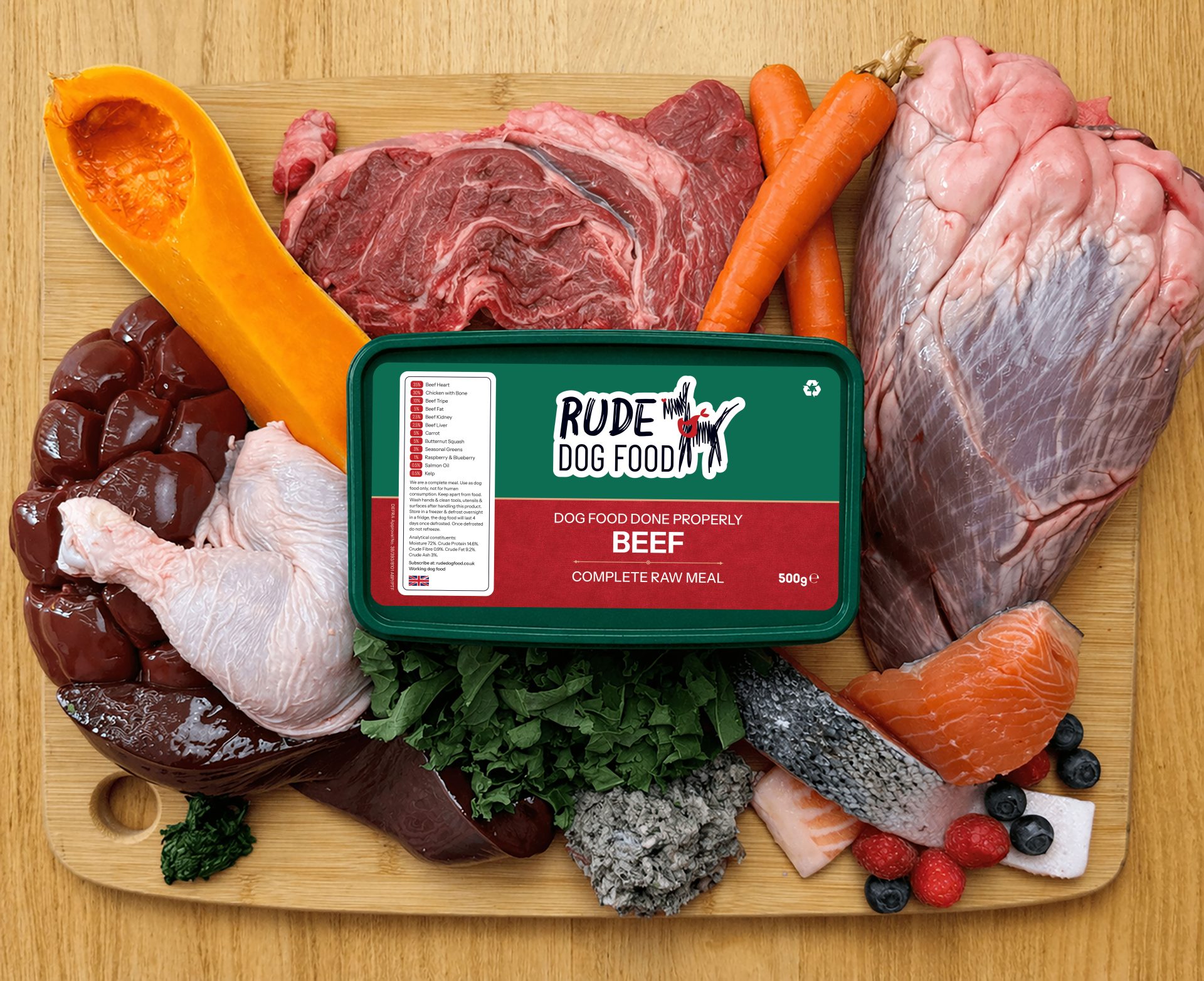
Beef- rich in Iron and zinc.
Chicken- a lean protein source containing vital nutrients like B Vitamins.
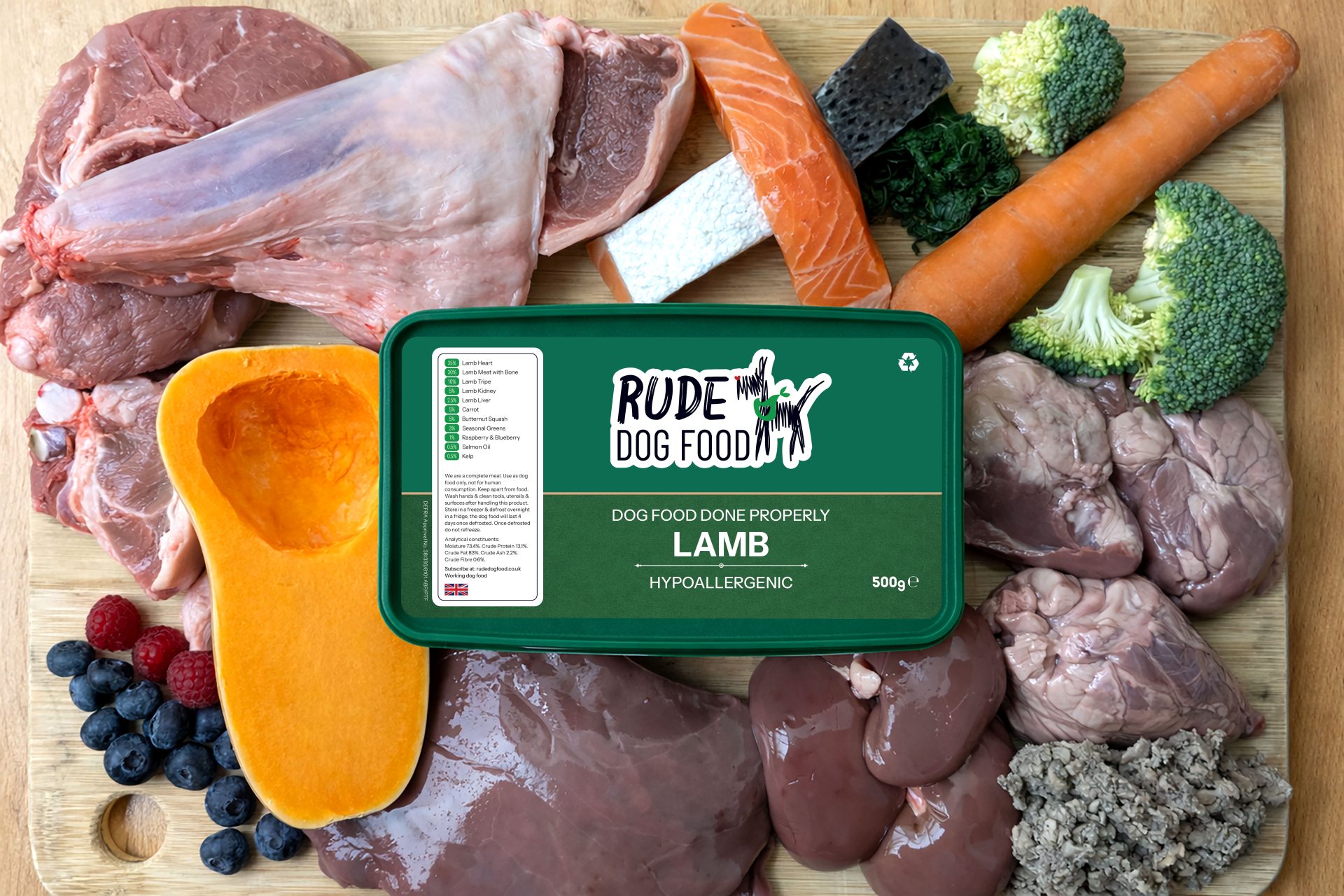
Lamb- High in healthy fats and essential amino acids.
Venison- A lean protein source, rich in Iron and B vitamins. Also a quality choice for dogs with sensitivities to other protein sources.
Turkey- A leaner choice to chicken, with a similar nutrient profile.
Does your dog have allergies?
If your dog has food sensitivities, then avoid the protein sources that they can’t tolerate. It is why RUDE created the hypoallergenic blend of Lamb & Venison. This blend avoids all known allergens in dogs and still ensures your dog gets some variety in their protein sources.
You can see all of the produce used to create the vast range of RUDE Dog Food products in the ingredients list on the product pages.
How to create a balanced diet.
Just having a protein source isn’t enough. You may find that your dog’s favourite meat is beef, but you can’t just feed them lean muscle meat. They need a lot of other ingredients to create a balanced diet. A complete raw diet must contain organic meat, raw bone and fat.
Organ meat such as Heart, Liver and Kidney.
Heart
Although often considered muscle meat, the heart is technically classified as secreting offal in raw feeding because it is so nutrient-dense. It plays a vital role in ensuring your dog gets a well-rounded, species-appropriate diet.
Key Benefits of Heart:
Taurine: Essential for heart health, eye function, and overall cardiovascular health—particularly important for breeds prone to heart issues like Dobermans and Boxers.
Coenzyme Q10 (CoQ10): Supports cellular energy production and heart function.
Iron: Helps prevent anaemia and supports oxygen transport in the blood.
B Vitamins (especially B12): Crucial for energy production, nervous system health, and red blood cell formation.
Collagen & Elastin: Supports joint health, skin elasticity, and overall tissue repair.
Kidney
The kidney is a true-secreting organ and is packed with a variety of vitamins and minerals that are difficult to source from muscle meat alone. It’s a key part of the “10% organ” requirement in the classic 80/10/10 raw feeding ratio.
Key Benefits of Kidney:
Vitamin A: Supports vision, skin health, and immune function.
B Vitamins (especially B2, B3, B12): Essential for metabolism, energy production, and nerve function.
Selenium: A powerful antioxidant that helps reduce inflammation and supports thyroid health.
Zinc: Supports immune function, skin health, and wound healing.
Iron: Crucial for red blood cell production and preventing anaemia.
Liver
The liver is one of the most important organs in a raw dog food diet and is a non-negotiable in raw feeding. It is a secreting organ that is packed with essential nutrients, making it one of the most nutrient-dense foods you can offer your dog.
Key Benefits of Liver:
Vitamin A (Retinol): Critical for vision, skin health, immune function, and cellular growth. The liver is one of the richest natural sources.
Iron (Heme Iron): Easily absorbed and supports red blood cell production, preventing anaemia and boosting energy levels.
Copper: Essential for bone development, nerve health, and red blood cell formation.
B Vitamins (Especially B12 & Folate): Crucial for energy production, nervous system support, and maintaining healthy blood cells.
Choline: Supports brain health, liver function, and fat metabolism.
Now you have the understanding of the reasons a variety of high quality protein sources are of paramount importance when feeding your dog, you now have the tools to be able to start raw feeding at home. Or of course, if you would like the help of the experts, we would be happy to oblige.
So if you want to leave the hassle of raw feeding preparation to us and be assured in the knowledge that your dog is consuming all of the appropriate vitamins, minerals and macronutrients.


 Your Cart